

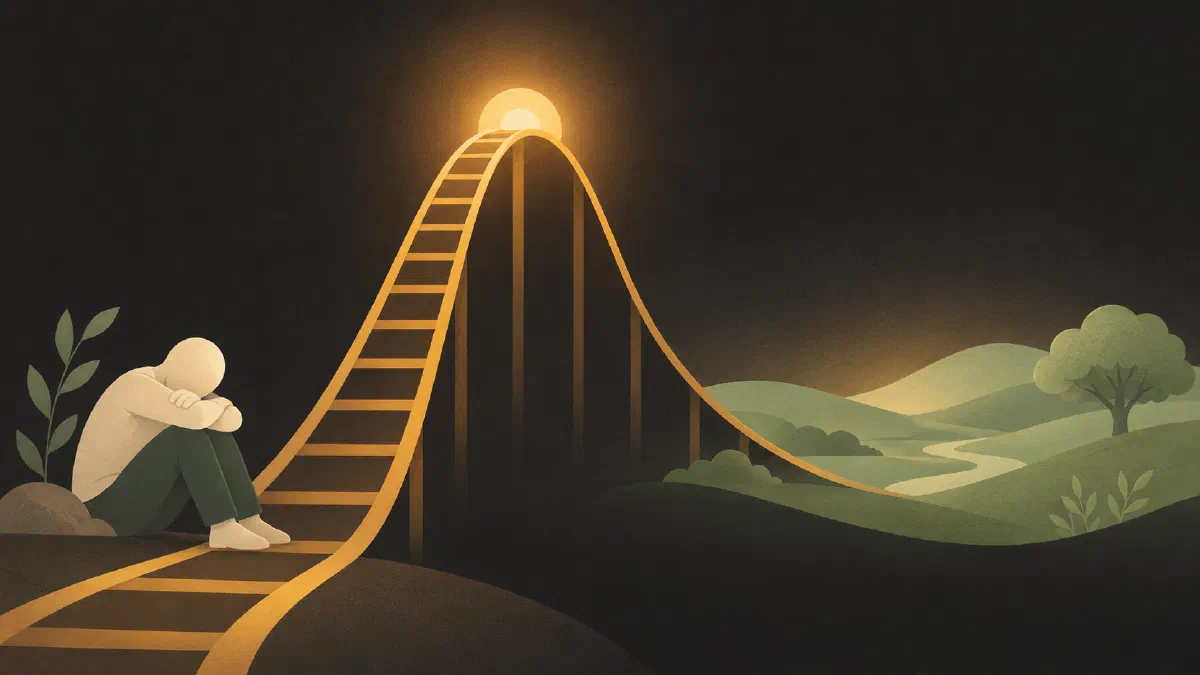
You got through a big day: a deadline, a full calendar, a long drive, a family event. The next morning you can barely start anything, and even easy tasks feel heavy. Many adults with ADHD call this an “ADHD crash”. This guide explains what is likely feeding it, how to recover on the day after, and how to pace intense days so the next crash costs you less.
This article is educational and does not replace advice from a doctor.
What people mean by an “ADHD crash”
“ADHD crash” is an everyday phrase, not a diagnosis or a medical term. It is not one of the adult ADHD symptoms the NHS lists, such as being easily distracted, finding it hard to organise your time or to finish tasks. People use it to describe a sharp drop in energy, focus and motivation after a period of high effort, often lasting a day or two.
It helps to separate it from three neighbours:
- A daily dip. If your energy drops at roughly the same hour every afternoon, that is a different pattern; see our guide to the ADHD afternoon crash.
- Burnout. A crash usually follows a specific intense day or week and lifts with rest. If you have felt drained, detached and less effective for weeks, read our guide to ADHD burnout instead.
- Medication timing. If your crashes line up with when your medication wears off, do not change your dose or timing yourself. Note when it happens and discuss it with your prescriber. Medication effects are outside this article.
Why intense days hit harder with ADHD
No study has measured “ADHD crashes” directly. Research does point to several things that are more common with ADHD and that can make an intense day cost more energy than it would for someone else. Treat them as possible contributors to check against your own experience, not as proven causes.
- A higher baseline of fatigue. In a UK study of 243 adults attending ADHD services, the ADHD group was significantly more fatigued than healthy controls, and 62% met the study’s threshold for significant fatigue. If you start the day with less in the tank, a demanding day can empty it faster. Our guide to ADHD and fatigue covers this in depth.
- Hyperfocus. Adults with higher ADHD symptoms report more frequent hyperfocus, meaning long stretches of intense, absorbed attention, at school, in hobbies and during screen time. The study did not look at what happens afterwards, but many people notice that hours without breaks, food or water leave them drained. See hyperfocus and burnout for how to stop before that point.
- More stress and more stressors. A small Swedish study (28 adults with ADHD, 28 controls) found that adults with ADHD reported significantly more stress than controls, and that stress was linked with the number of everyday stressors. A larger community study of 983 adults also found that ADHD symptoms were linked with higher perceived stress. Intense days usually stack several stressors at once.
- Strong emotions. A major review concluded that emotion dysregulation is common in ADHD across the lifespan and a major contributor to impairment. A tense meeting, criticism or an exciting event can take more out of you than the clock suggests.
- Sensory load. In a study of 116 adults with ADHD, participants reported more sensory over- and under-sensitivity than norm groups, especially for sound and activity level. Open-plan offices, events and travel can add a hidden load. Our guide to feeling overstimulated has in-the-moment steps.
- Short or late sleep. A systematic review of 62 studies found consistent evidence that ADHD is linked with a later body clock and delayed sleep onset. The CDC recommends that adults aged 18 to 60 get 7 or more hours of sleep. Intense days often cut into sleep before and after, which deepens the drop.
Why “I can’t start anything” is part of it
One model of mental fatigue proposes that people stop being motivated to keep going when the effort a task costs seems to outweigh the reward. This is a theory, not an ADHD-specific finding, but it fits how a crash feels: tasks have not changed, yet everything seems to cost more. That is a reason to make tasks smaller and cheaper on crash days, not a sign of laziness.
What to try first: a quick decision table
Use this to match what happened yesterday with a first step today. It is a planning aid, not a diagnosis.
| What drained you | What you might notice the next day | Try first |
|---|---|---|
| Hours of hyperfocus with no breaks | Stiff, hungry, head foggy, hard to switch tasks | Eat a proper meal, drink water, take a short walk before any screen work |
| Back-to-back meetings or social events | Low patience, want silence | A quiet morning block with notifications off |
| Noisy or busy place (office, event, travel) | Irritable, sensitive to sound | Headphones or a quieter room, fewer inputs for a few hours |
| An emotional conversation or conflict | Replaying it, hard to concentrate | Write it down once, then a short break before work |
| A late night or poor sleep | Heavy, slow, sleepy | Keep your usual wake time, easy tasks only, plan an early night |
| Several of these at once | Everything feels too much | Shrink the day to a minimum list (Step 1 below) |
A recovery routine for the day after
This routine draws on general fatigue and work-recovery research, not on trials in ADHD. Adapt it to your job and responsibilities.
- Shrink the plan. Write a minimum list of one to three things that must happen today; move or drop the rest. The Royal College of Occupational Therapists advises people managing their energy to be kind to themselves, not try to do everything, and delegate or drop tasks where they can.
- Cover the basics first. The NHS suggests regular meals and healthy snacks every 3 to 4 hours and notes that mild dehydration can make you feel tired, so a glass of water can help.
- Move a little. The same NHS guidance notes that even a single 15-minute walk can give you an energy boost. A slow walk around the block counts.
- Work in short blocks with breaks. A meta-analysis of 22 study samples found that breaks of 10 minutes or less gave a small boost in vigour and a small reduction in fatigue. They helped performance only on less demanding tasks, and recovering from highly draining work may need longer breaks. So pair short blocks with easy tasks, and expect a slower day.
- Switch off in the evening. Work-recovery researchers describe four recovery experiences: psychological detachment from work, relaxation, mastery and control. A meta-analysis of 91 samples found that detaching from work was linked with less exhaustion and fatigue, more well-being and better sleep. These are correlations, but they support closing the laptop and doing something unrelated.
- Protect tonight’s sleep. NHS fatigue advice includes going to bed and getting up at the same time every day, avoiding daytime naps, and cutting down on caffeine and alcohol. Its ADHD page adds a quiet, dark bedroom and avoiding screens close to bedtime. Our guide to ADHD and sleep goes further.

Pacing: making the next intense day cost less
Crashes often follow a day where all your energy went out at once. Pacing means spreading effort so you do not hit empty. The RCOT organises energy management around three Ps: pacing, planning and prioritising. Its guide is written for people with extreme fatigue, those recovering from illness and those managing a long-term health condition, not for ADHD, but the ideas translate well:
- Pace: split activities into smaller tasks spread across the day, and build rests into your activities.
- Plan: plan ahead, spread activities out, and measure and track your energy use.
- Prioritise: balance what you need to do with what you want to do, and look for activities that leave you energised.
In a working week, that might look like this:
- When you see an intense day coming (a launch, a workshop, a trip), keep the day after lighter where you can: no new projects, fewer meetings.
- On the intense day, set a timer for planned breaks so hyperfocus does not run for hours without food or water.
- Put one recovery block in your calendar the evening of the intense day, and treat it like an appointment.
- After each crash, note what came before it. Over a few weeks, your own triggers become easier to plan around.
Worked example and a fill-in crash plan
This is an illustrative example, not a real person. Priya is a project coordinator with ADHD. On Tuesday she ran an all-day client workshop, skipped lunch, stayed late to finish the notes in a burst of hyperfocus and slept five hours. On Wednesday she stared at her inbox for an hour without opening a single email.
What Priya did:
- Wrote a minimum list: send the workshop summary, reply to two urgent emails. Everything else moved to Thursday or Friday.
- Ate breakfast, filled a water bottle and walked for 15 minutes before opening her laptop.
- Worked in 15-minute blocks on the summary, with a five-minute break between blocks away from her screen.
- Logged off at her normal time, cooked something simple and kept her usual bedtime.
- Added a note to her calendar: after the next workshop, keep the following morning free of meetings and plan lunch in advance.
By Thursday her energy was closer to normal. The crash did not vanish, but it was shorter, and she had a plan for the next workshop.
Copy this plan into a notebook and fill it in before your next intense day:
| Question | My answer |
|---|---|
| Intense day coming up | |
| Likely drains (hyperfocus, people, noise, emotions, short sleep) | |
| Breaks I will take on the day, and how I will be reminded | |
| What I will eat and when | |
| Minimum list for the day after (1–3 items) | |
| What I can move, delegate or drop | |
| My evening switch-off activity | |
| Bedtime and wake time I will keep |
When it is more than a crash
A crash that lifts within a day or two of lighter activity is common. It is worth talking to a doctor if the low does not lift. The NHS suggests seeing a GP if you have been feeling tired for a few weeks and are not sure why, tiredness affects your daily life, or you also have symptoms such as weight loss or mood changes. The NHS also notes that adults with ADHD may be more likely to have anxiety and depression. Please do not self-diagnose.
If low energy comes with feeling hopeless, or you have thoughts of harming yourself, contact your local emergency number or a crisis line in your country straight away.
Summary and your next step
An ADHD crash is a popular name for the drop in energy and motivation after an intense day. Higher everyday fatigue, hyperfocus, stress, strong emotions, sensory load and short sleep can all add to it. On the day after, shrink the plan, cover the basics, work in short blocks with breaks, switch off in the evening and protect your sleep. Then use pacing so the next intense day does not take everything.
Your next step: fill in the crash plan above for your next intense day, and on the day after, try three 15-minute blocks on easy tasks with a five-minute break between them. You can time them with the free Cyklio Focus Timer in your browser, or with Cyklio, our focus timer app (made by Mindly 360). Cyklio has a 7-day free trial with full access and no account or card needed, focus sessions from 10 to 60 minutes and a quick rating after each session (full focus, distractions or not today), so you can see how your recovery days actually go. More about the app is on the Cyklio app page.