


You open your laptop to answer one email and twenty minutes later you have six tabs, three half-started tasks and a tight chest. Nothing is on fire, yet everything feels like too much. This guide explains why ADHD can make that pile-up more likely, which triggers to watch for, and a 15-minute routine to reset and shrink the list back to something you can actually do.
What people mean by ADHD overwhelm
“ADHD overwhelm” is an everyday phrase, not a diagnosis. People use it for the moment when open tasks, decisions, feelings and noise arrive faster than they can be sorted, and the brain seems to stall or scatter. Anyone can feel this way: the NHS lists feeling overwhelmed and difficulty concentrating among the common mental signs of stress.
What makes it “ADHD-style” is the kind of load involved. The NHS describes adult ADHD symptoms such as being easily distracted or forgetful, finding it hard to organise your time and finding it hard to follow instructions or finish tasks. Put those together with a busy week and the task list stops being a plan and starts feeling like a wall.
Feeling overwhelmed does not on its own mean you have ADHD. If you are not sure, a doctor can assess it; this article is about handling the overwhelm, whatever the cause.
Why ADHD makes overwhelm more likely
Because “ADHD overwhelm” is an everyday phrase rather than a clinical term, studies do not measure it directly. They do cover several ingredients that plausibly feed it. Here is what it supports, and how strongly.
Less room to hold and sort tasks
A meta-analysis of 83 studies (Willcutt and colleagues, 2005) found that groups with ADHD showed weaker executive functions, with the strongest and most consistent differences in response inhibition, vigilance, working memory and planning. The effects were medium-sized, and the authors concluded that these weaknesses do not explain every case of ADHD, so this describes groups, not every person.
Working memory is small for everyone. A review by Nelson Cowan (2010) describes a central store limited to about three to five meaningful items in young adults. When a dozen tasks compete for those few slots and planning is also harder, sorting them in your head is a losing game.
Unfinished tasks keep tugging
In a series of experiments, Masicampo and Baumeister (2011) showed that unfinished goals caused intrusive thoughts and hurt performance on unrelated tasks. Making a specific plan for those goals removed the interference. This research was not done in people with ADHD, but it explains why a long list of vague “should dos” can feel loud, and why writing a plan quiets it.
Feelings rise fast and settle slowly
A review in The American Journal of Psychiatry (Shaw and colleagues, 2014) concluded that emotion dysregulation is common in ADHD throughout the lifespan and is a major contributor to impairment. Frustration about one late task can spill onto the next, and the whole list starts to feel emotionally heavy, not just long.
More everyday stress, and stress makes thinking harder
In a small study comparing 28 adults with ADHD with 28 controls, Hirvikoski and colleagues (2009) found that the ADHD group reported significantly more self-perceived stress, and that higher stress went together with more everyday stressors. Stress then feeds back: a review by Amy Arnsten (2009) explains that the prefrontal cortex, which supports planning and working memory, is very sensitive to stress, and even mild uncontrollable stress can rapidly impair it. The loop is easy to picture: more open tasks, more stress, less capacity to sort them.
Noise and input can add up
In a study of 116 adults with ADHD, Bijlenga and colleagues (2017) found more sensory hypersensitivity and hyposensitivity than in norm groups, especially for sound and activity level. Not everyone with ADHD is sensitive to noise, but if you are, an open-plan office can drain capacity before the work even starts. If the problem is mostly sensory, start the reset below by lowering input.
Common ADHD overwhelm triggers
Spotting your usual trigger tells you which part of the reset matters most. These are common patterns, not a checklist for diagnosis.
| Trigger | What it looks like | First move |
|---|---|---|
| Too many open loops | Tasks live in your head, inbox, sticky notes and chat at once | Brain dump everything onto one page |
| No clear first step | “Sort out the project” sits on the list for days | Rewrite it as one physical action |
| Everything feels urgent | You flit between tasks and finish none | Apply the three-question cut below |
| A sudden change of plan | A meeting moves and the whole day collapses | Re-pick one task for the next 30 minutes only |
| Emotional spill-over | One critical message colours every task | Pause, name the feeling, then restart small |
| Sensory load | Noise, chat pings, bright screens | Lower input before anything else |
| Running on empty | You skipped lunch or slept badly | Food, water, a short break, then a smaller list |
The 15-minute ADHD overwhelm reset
Use this when you notice the scatter: tab-hopping, rereading the same line, a tight chest, snapping at people. Do the steps in order. You do not need to feel calm before moving on; “a bit less loud” is enough.
- Lower the input (1 minute). Close every tab except one blank document, mute chat, put your phone face down or in a drawer. Headphones on if noise is part of it.
- Settle your body (3 to 5 minutes). Breathe slowly into your belly, in through the nose and out through the mouth. The NHS breathing exercise for stress suggests counting to five on each breath if that helps and continuing for at least five minutes; even a couple of minutes is a start. For more calming options, see how to calm down when ADHD overwhelm spikes.
- Brain dump (3 minutes). Write every task, worry and reminder on one page, fast and messy. No sorting yet. The goal is to get things out of a working memory that only holds a handful of items.
- Shrink the list (4 minutes). Run the three-question cut from the next section and keep no more than three items for today.
- Plan the first step (1 minute). Pick one of the three and write its first physical action plus an if-then plan: “If it is 2:30, then I open the client file and write the first heading.” A meta-analysis of 94 tests (Gollwitzer and Sheeran, 2006) found that if-then plans of this kind had a medium-to-large positive effect on reaching goals. They are not magic, but they are well supported.
- Start a short session (10 to 15 minutes, outside the reset). Set a timer for one block on that one step, then take a short break. A meta-analysis on micro-breaks (Albulescu and colleagues, 2022) found small but significant effects on feeling more energetic and less fatigued, so the break is part of the plan, not a reward you have to earn. You can use our free focus timer or Cyklio, our focus timer app, which offers sessions from 10 to 60 minutes.
If even step 1 feels impossible and you have gone blank, that is closer to what people call a shutdown; our guide to ADHD shutdown has lower-demand steps.
Shrink the list: the three-question cut
A long list is not more productive than a short one; it is just harder to look at. Take your brain dump and ask three questions of each item:
- Is there a real deadline in the next 48 hours? Not “I would like it done”, an actual time when something happens.
- Is someone waiting on it or blocked by it? A colleague, a client, a family member.
- Would anything bad happen if it waited a week? Be honest; most items fail this one.
Then sort:
| Answers | Where it goes | What you do |
|---|---|---|
| Yes to 1 or 2 | Today (max 3) | Rewrite as one first physical step |
| No to 1 and 2, yes to 3 | Parked, with a date | Write the day you will look at it again |
| Someone else could do it or decide it | Ask | Send one short message or note it for your next check-in |
| No to all three | Drop or someday | Cross it off or move it to a someday page |
If more than three items land in “Today”, choose by who is waiting and what has the nearest deadline, and move the rest to tomorrow’s top three. Keeping only three visible is a practical choice, not a magic number, but it fits the small working memory described above. For deeper methods, see how to prioritise tasks with ADHD and how to break down tasks with ADHD.
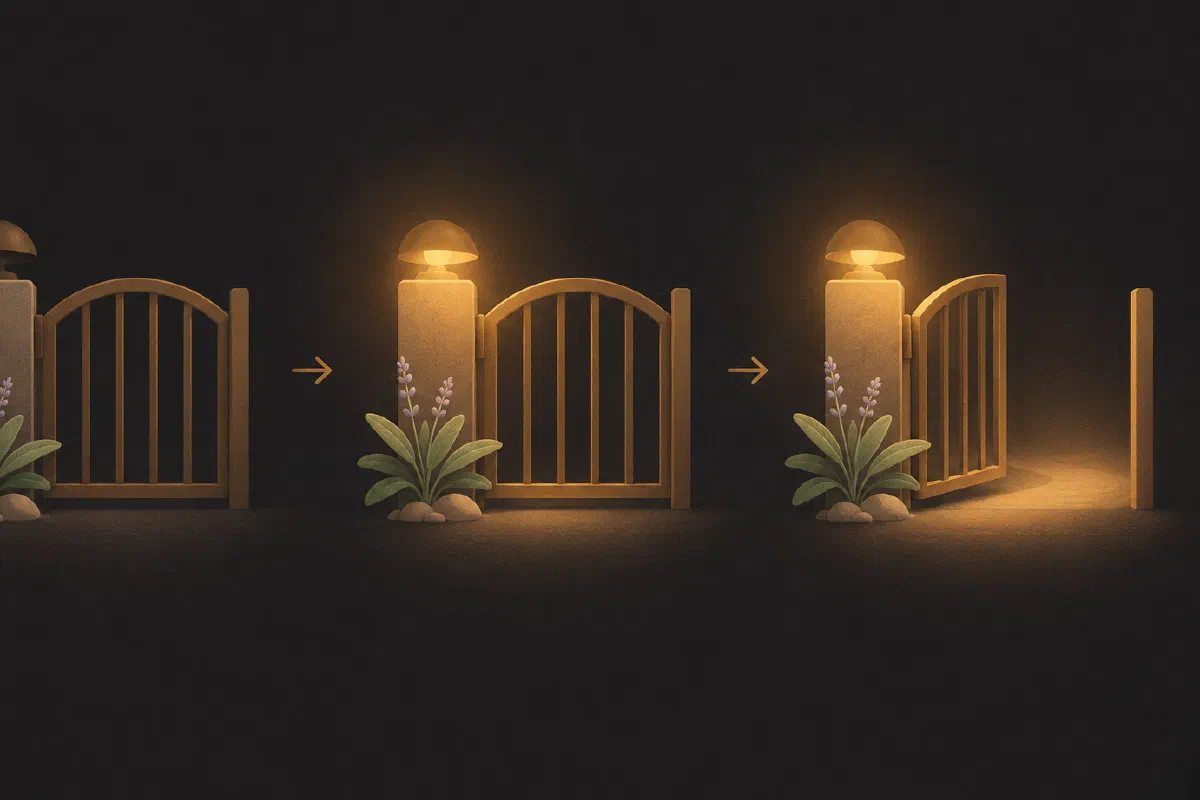
Worked example: a Wednesday that got away
This is a composite, illustrative example, not a real user story.
At 1:40 p.m. Ola, a project coordinator with ADHD, has a status report due at 5, a supplier who has emailed twice, a team lunch order to collect, and a meeting that just moved forward by an hour. She has opened the report three times and written nothing. Her list has 19 items across two apps and a notebook.
- 1:40. She closes Slack and email and puts on headphones (lower input).
- 1:41–1:45. Slow belly breathing at her desk, counting to five.
- 1:45–1:48. Brain dump on one page: 19 tasks plus “worried my manager thinks I’m behind”.
- 1:48–1:52. Three-question cut. Today: status report (deadline 5 p.m.), reply to supplier (waiting on her), prep two lines for the moved meeting. Parked with dates: 9 items. Ask: 2 items for her manager. Dropped or someday: 5 items. The worry goes on the “Ask” line as a question for her next one-to-one.
- 1:52. First step: “Open last week’s report and copy the headings.” If-then: “If it is 1:55, I open last week’s report.”
- 1:55–2:10. One 15-minute session. She finishes the headings and two sections, then takes a five-minute break and writes the supplier reply.
Nothing about her workload changed. What changed is that 19 items became three visible ones, each with a first step.
Keeping overwhelm from building again
A reset gets you through today. A few light habits make the next pile-up smaller:
- One capture place. Every new task goes onto one list, not into your head or a random tab.
- A daily top three. Each morning, or at the end of the previous day, choose three items for today using the same three questions.
- A short weekly prune. Once a week, spend ten minutes re-reading parked items and dropping what no longer matters.
- Notice early signs. Tab-hopping, rereading, a tight jaw. Running steps 1 to 3 early is easier than running all six at 4 p.m.
If your overwhelm is mostly about workload and boundaries at your job, our guide to feeling overwhelmed at work covers triage and negotiating priorities. For a general ten-minute plan that is not ADHD-specific, see feeling overwhelmed: what to do in the next 10 minutes.
When to get more support
Self-help has limits. The NHS suggests talking to a GP if you are finding it hard to manage stress or your own efforts are not helping. Consider getting support if:
- you feel overwhelmed most days for weeks, not just in busy patches,
- it is affecting your work, studies, sleep or relationships,
- you also have persistent low mood, worry or panic. The NIMH notes that ADHD often occurs alongside conditions such as anxiety and depression,
- you suspect ADHD but have never been assessed. Ask a GP or doctor about an assessment rather than relying on online checklists.
If you ever feel unsafe or think you might harm yourself, contact your local emergency number or a crisis line in your country straight away.
Summary
- ADHD overwhelm is an everyday term for open tasks, feelings and input piling up faster than you can sort them.
- Research on working memory, planning, emotion regulation, stress and sensory sensitivity helps explain why it can happen more often with ADHD.
- Reset in order: lower input, settle your body, brain dump, shrink the list to three, plan one first step, start a short session.
- The three-question cut (deadline in 48 hours, someone waiting, harm in waiting a week) keeps your visible list small.
Your next step: the next time you notice tab-hopping, run steps 1 to 3 of the reset, then start one 10-minute session on the first step you wrote. Cyklio, our app, can time it and add it to your daily goal, and the 7-day free trial needs no account or card.