


It is 14:30, the report you planned to finish is open, and you have read the same paragraph three times. The afternoon slump at work is common and fairly predictable, which means you can plan around it instead of fighting it with willpower.
This guide covers why the dip happens, how to schedule your work by energy, which tasks fit the slow hours, which breaks help, and a sample afternoon plan you can copy.
Why the afternoon slump happens
The dip is not just in your head, and it is not only about lunch. In a review of the research, sleep researcher Timothy Monk concluded that the post-lunch dip is a real phenomenon that can occur even when people have had no lunch, and even when they do not know what time it is. He links it to a rise in sleepiness in the afternoon that is part of the body’s daily rhythm. The same review notes that a high-carbohydrate lunch makes the dip worse and that it may be more likely in people who are strongly “morning types”.
The dip also sits on top of a wider pattern. A review of circadian rhythms and thinking found that attention, executive functions and memory all vary with time of day, and that the pattern depends on your chronotype, meaning whether you naturally lean towards mornings or evenings. In other words, your best and worst hours are partly personal.
Two everyday factors make the slump deeper:
- Short sleep. The CDC recommends 7 or more hours of sleep a night for adults aged 18 to 60. If you are regularly below that, look at sleep before you reorganise your afternoon.
- A long block of sitting with the same kind of task. A morning of meetings or screens followed by more of the same after lunch gives your attention nothing new.
If the problem is mainly heaviness and fuzzy thinking right after you eat, our guide to brain fog after eating goes deeper into that side of it. This article focuses on how to plan and protect your work.
Schedule your work by energy
The most reliable after lunch productivity tip is not a trick for the dip itself. It is moving the right work away from it.
Step 1: find your own pattern
Before you rearrange anything, spend one ordinary work week noting your energy. Three times a day (for example 10:00, 14:00 and 16:30), rate your focus as high, medium or low and write down what you were doing. By Friday most people see a clear shape: a sharp window, a dip, and often a partial recovery later in the afternoon.
Step 2: sort your tasks into three kinds
- Demanding: writing, analysis, planning, learning something new, decisions with consequences.
- Medium: editing, reviewing, preparing slides from notes you already have, routine calls.
- Light: email triage, filing, updating trackers, booking meetings, tidying documents.
Step 3: match them to your hours
Put demanding work in your sharpest window, medium work at the edges of the dip, and light work in its lowest point. If you block your calendar, our guide to time blocking shows how to turn this into fixed slots so the plan survives a busy week.
You will not always control your schedule. Meetings land where they land. Even so, protecting one demanding block a day in your best window and refusing to schedule your hardest task at 14:00 makes a visible difference to how the afternoon feels.
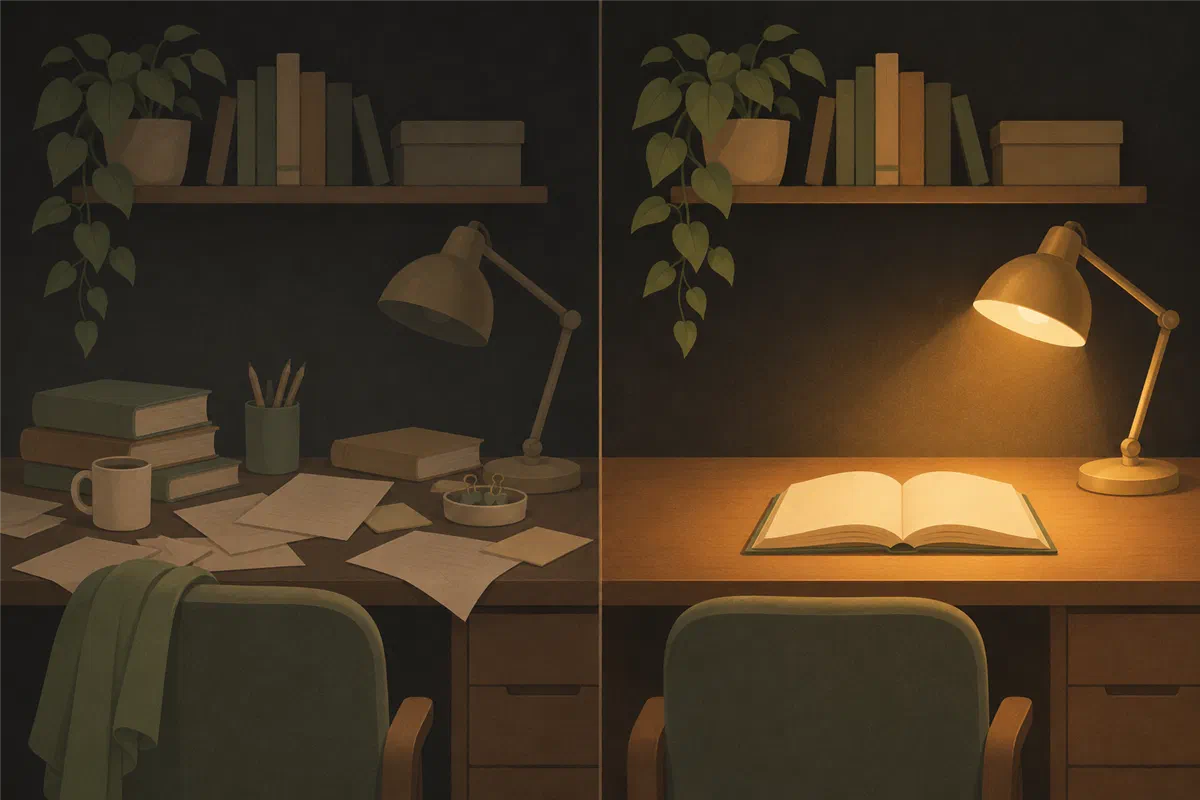
Light tasks vs demanding tasks: what to put after lunch
Use this table when you plan the afternoon. It is a rule of thumb, not a law: adjust it to your own energy log.
| Your energy right now | Good fit | Poor fit | How to work |
|---|---|---|---|
| Low (deepest part of the dip) | Email triage, filing, data entry, updating a tracker, simple admin | First drafts, complex analysis, important decisions | Short block (10–15 min), one task, then a movement break |
| Medium (dip easing) | Editing, reviewing a colleague’s work, preparing materials, routine calls | Starting a large new project from a blank page | 20–30 min blocks with a clear finish line |
| Recovering (late afternoon) | A second, smaller demanding task, planning tomorrow | Anything you need at your absolute best | 25–45 min block, then a proper wrap-up |
| Can’t avoid it (deadline in the dip) | The demanding task, broken into very small steps | Multitasking alongside it | Write the next concrete step first, close other windows, short timed block |
The last row matters. Sometimes the hard task has to happen at 14:00. Then make it smaller: instead of “finish the budget”, write “check the three figures in section 2”. A small, concrete step is easier to start when energy is low.
Short breaks that actually help
Breaks are not a reward you earn at the end. In the dip they are part of the plan.
- Micro-breaks lift energy a little. A 2022 meta-analysis of 22 study samples found that breaks of 10 minutes or less gave a small increase in vigour and a small reduction in fatigue. They did not reliably improve performance overall, although they helped on clerical and creative tasks, and longer breaks within that range tended to help performance more. Think of them as a modest lift, not a cure.
- Move, if you can. In a randomised crossover trial with 30 sedentary adults, six five-minute walks spread over a six-hour sitting day increased self-reported energy and vigour compared with sitting the whole time; the short walks also improved mood and reduced fatigue by the end of the day. Cognitive test scores did not change, so the benefit was in how people felt, not in a measurable boost in thinking. A walk to refill water, a lap of the floor or taking a call standing up all count.
- A short nap, where it is possible. In a lab study of sleep-restricted young adults, a 10-minute afternoon nap gave immediate benefits for alertness and performance, a 20-minute nap helped after a short delay, and a 30-minute nap left people groggy at first. Many workplaces have no place to nap, so treat this as an option for home-office days, not a rule.
- Daylight and bright light: mixed evidence. One study found that bright, blue-enriched light partly offset sleepiness and mood dips in students who missed their usual nap, while another found that light changed brain activity but not sleepiness or task performance. Sitting near a window or stepping outside is pleasant and low-risk, but do not expect too much from light alone.
- Watch the timing of coffee. An afternoon coffee can feel like the obvious fix. Keep bedtime in mind: in a sleep study, a 400 mg dose of caffeine taken 6 hours before bed still significantly disrupted sleep, and the authors suggest avoiding substantial caffeine for at least 6 hours before bed. A late coffee that costs you sleep can make tomorrow’s slump worse.
For more ideas on what to do in a five-minute pause without ending up on your phone, see our list of break ideas between focus sessions.
A sample afternoon plan
Here is an example of how a project coordinator, who usually feels sharp from 9:00 to 11:30, flat from about 13:30 to 15:00 and better again after 15:30, could plan an ordinary afternoon. The demanding task of the day, a project proposal draft, was already done in the morning.
| Time | What happens | Why |
|---|---|---|
| 12:30–13:15 | Lunch away from the desk, with a short walk | A change of scene and some movement before the dip |
| 13:15–13:30 | Email triage: reply, file or schedule, nothing longer than two minutes | Light task while settling back in |
| 13:30–13:45 | Focus block 1: update the project tracker | Light, clear task in the lowest point of the dip |
| 13:45–13:50 | Break: refill water, stand by the window | Micro-break and movement |
| 13:50–14:10 | Focus block 2: review a colleague’s slides and leave comments | Medium task with a clear finish line |
| 14:10–14:15 | Break: walk to the kitchen and back | Movement break |
| 14:15–15:00 | Weekly status meeting | Talking with people is a change from solo screen work, and it needs no blank-page thinking |
| 15:00–15:05 | Break | Reset after the meeting |
| 15:05–15:45 | Focus block 3: edit the proposal drafted in the morning | Medium-to-demanding task as energy recovers |
| 15:45–16:30 | Focus block 4: plan next week’s workshop agenda | Second, smaller demanding task in the recovery window |
| 16:30–17:00 | Wrap-up: note where you stopped, choose tomorrow’s first task | Makes tomorrow morning’s start easier |
Notice what is missing: no first draft at 14:00, no long stretch without a break, and no coffee after mid-afternoon.
Your afternoon template
Copy this into your notes and fill it in for tomorrow:
- My usual dip: from ____ to ____.
- Demanding task (done before the dip or saved for later): ____________.
- Light tasks for the lowest point: ____________, ____________.
- Medium tasks for when the dip eases: ____________.
- Break plan: a 5-minute movement break after each block; last coffee by ____.
- Block length during the dip: 10–15 minutes. After the dip: 25–45 minutes.
- End-of-day note: where I stopped and my first task tomorrow.
When it is more than an ordinary slump
A predictable dip that lifts by late afternoon is normal. Some patterns are different, and they have their own guides:
- If you have ADHD and the afternoon feels like a sudden crash rather than a gentle dip, read our guide to the ADHD afternoon crash.
- If you feel drained by evening every day, not just after lunch, see mental fatigue at work.
- If the problem is too many messages, tabs and inputs rather than low energy, see information overload.
If you feel exhausted most of the day, every day, even with enough sleep, that is worth discussing with a doctor rather than solving with a better schedule.
Summary and your next step
The afternoon slump is a normal dip in alertness, linked to the body clock. It can feel worse after a high-carbohydrate lunch, a short night or a long stretch of sitting. You get more out of the afternoon by working with it: track your energy for a week, move demanding work to your sharper hours, put light tasks in the dip, use short sessions with movement breaks, and keep caffeine well away from bedtime.
Your next step: tomorrow, pick one light task for 14:00 and give it a 15-minute block, then take a five-minute walk. You can time it with the free Cyklio Focus Timer in your browser, or with Cyklio, our focus timer app (made by Mindly 360). Cyklio has a 7-day free trial with full access and no account or card needed, focus sessions from 10 to 60 minutes, and a quick rating after each session (full focus, distractions or not today). Its daily and weekly reports let you look back at how your afternoon sessions went. More about the app is on the Cyklio app page.