

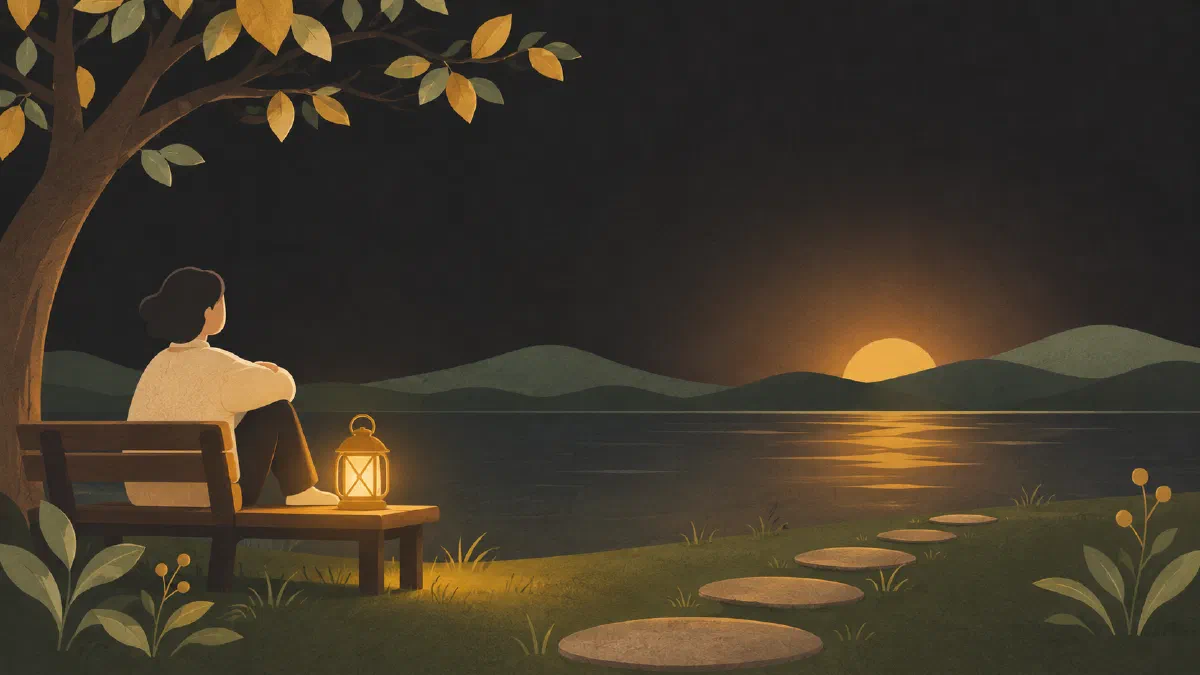
Recovering from burnout is less about pushing harder and more about doing things in a kind, sensible order. This guide walks you through five steps: reduce what drains you, rest in ways that actually restore, set boundaries, return to work gradually, and build a support team around you.
This article is educational and does not replace advice from a doctor.
If you feel you cannot keep yourself safe, or you are thinking about harming yourself, contact your local emergency number or a crisis line in your country straight away. If you are not sure who to call, a doctor, pharmacist or local health service can tell you.
Before you start: is it burnout?
The World Health Organization describes burn-out as a syndrome resulting from chronic workplace stress that has not been successfully managed, marked by exhaustion, mental distance from your job and reduced effectiveness. It is classified as an occupational phenomenon, not a medical condition. If you want the full picture of signs and causes, start with our guide to what burnout is.
Exhaustion has many possible causes. Germany’s IQWiG health institute notes that online burnout questionnaires cannot tell you whether you have burnout, and that depression, anxiety, physical illness or medicines should be considered together with a doctor. It also points out that people with depression may need different help than rest. If you are not sure which you are facing, our article on burnout vs depression can help you prepare for that conversation. You can start the gentle steps below and book an appointment in the same week.
Why rest alone is rarely enough
Time off helps, but it is only part of recovery. A meta-analysis of holiday studies found that vacations had a small positive effect on health and well-being, and that the effect faded soon after people returned to work. A review of 25 burnout programmes found that programmes aimed only at the individual reduced burnout for six months or less, while programmes combining individual and organisational changes lasted 12 months or more. In both cases the benefits declined over time.
The burnout researchers Christina Maslach and Michael Leiter describe burnout as the result of mismatches between a person and their job in six areas: workload, control, reward, community, fairness and values. They also note that very little research has tested how well specific remedies work. Still, the model gives you a useful map: recovery means resting and changing at least some of what drains you.
Step 1: Find and reduce the drain
Use the six areas as a checklist. You will not be able to fix all of them, and some are not in your hands. The aim is to find one or two changes you can make or ask for.
| Area | Question to ask yourself | A change you could make or request |
|---|---|---|
| Workload | Is there simply more work than hours? | Ask your manager which tasks can be dropped, delayed or shared |
| Control | Do I have a say in how and when I work? | Request more choice over scheduling or the order of tasks |
| Reward | Is my effort noticed at all? | Ask for regular feedback; note your own finished tasks each week |
| Community | Do I feel supported by the people around me? | Reconnect with one trusted colleague; raise unresolved conflict with HR or a manager |
| Fairness | Are decisions and workloads shared fairly? | Ask how work is allocated; document patterns calmly |
| Values | Am I being asked to work against what matters to me? | Name the conflict, even if only to yourself; it may shape longer-term decisions |
The NHS advice on stress fits this step well: do not try to do everything at once, and do not focus on the things you cannot change. Pick the one change most likely to free up energy this week, act on it, and come back to the table in a week.
Step 2: Rest that actually restores
Protect your sleep first
Sleep deserves priority. In a diary study of 60 people with clinical burnout, poor recovery through sleep was linked to the severity of exhaustion, and the authors concluded that impaired sleep recovery may hamper recovery from burnout independently of depression. The NHS suggests simple habits to start with: going to bed and waking up at around the same time each day, giving yourself time to relax before bed and putting your phone away. If self-help does not improve things, or you think you may have insomnia, the NHS advises speaking to a GP.
Start with low-effort rest, then add more
In interviews with 38 people who had been treated for exhaustion disorder six to ten years earlier, participants described a shift over time from low-effort recovery activities to shorter, more active ones. This was a small qualitative study, so treat it as a helpful pattern rather than a rule. In practice that might mean:
- Early on: lying down, quiet walks, music, time in nature, nothing to achieve.
- Later: longer walks, light exercise, hobbies that need a little focus, seeing friends.
Keep short breaks in your day
When you are working, short breaks may help a little. A 2022 meta-analysis of 22 study samples found that micro-breaks of up to 10 minutes gave a small boost to energy and a small reduction in fatigue, although they did not reliably improve performance. The authors suggest that very draining work may need longer breaks.
Step 3: Set boundaries that let you switch off
Mentally leaving work behind seems to matter. A meta-analysis of 91 study samples found that psychological detachment from work was associated with less exhaustion, better sleep and less fatigue, and that higher job demands went with less detachment. Boundaries make detachment easier:
- A fixed end time. Decide when work stops and keep to it on most days.
- Notifications off after hours. Remove work email from your phone, or schedule a quiet mode.
- A shutdown ritual. Write tomorrow’s first task on a note, close every tab, and say “done for today”.
- A clear “not now”. For example: “I can’t take this on this month. Can we look at it again in March?”
- Protected recovery time. Put rest in your calendar like a meeting.
If you have ADHD and tend to lose hours in long bursts of work, our guide to hyperfocus burnout covers stop signals and timers as a brake. For boundaries and workload conversations in an ADHD context, see ADHD burnout at work.
Step 4: Plan a gradual return
Whether you are coming back from sick leave or rebuilding while still at work, a stepwise return lets you test your energy before going back to full speed.
What the research suggests:
- Communication matters. A systematic review of 10 studies found that better communication was associated with return to work, while low control at work was associated with a harder return. Part-time sick leave and better sleep were also linked to return to work. These were associations, not proof of cause.
- Workplace involvement helps. A 2023 review of eight studies found that only a workplace-directed intervention significantly improved return to work, though the authors say no firm conclusions can be drawn because the studies were few and varied.
In the UK, the workplace advice service Acas suggests a return-to-work meeting where you and your employer can agree on a plan for returning, for example a phased return. Acas also notes that you do not have to tell your employer anything about the cause. The WHO lists adjustments such as flexible working hours, extra time to complete tasks and modified assignments to reduce stress. Rules on sick leave and adjustments vary by country; our article on burnout sick leave covers how to raise it with a doctor and employer in general terms.
A worked example: a six-week phased return
This is a composite example for illustration, not a real person or a prescription. Agree your own plan with your employer and, where relevant, your doctor.
Tom, 41, a project coordinator, is returning after several weeks off with burnout. At his return-to-work meeting he and his manager agree this plan:
| Week | Hours | Work | Recovery habits |
|---|---|---|---|
| 1–2 | Mornings only, three days a week | Catching up on changes; no deadlines; one familiar task | Fixed wake-up time; a walk every afternoon |
| 3–4 | Mornings, five days a week | Two small projects; no out-of-hours messages | Work email off his phone; short break every hour |
| 5 | Four full days | Normal tasks except the client account that drained him most | Shutdown ritual at 17:00 |
| 6 | Review meeting | Agrees which parts of the old workload stay with a colleague | Keeps the habits that worked |
In week 3, Tom has two bad days. Instead of pushing through, he tells his manager and repeats week 2’s hours for a few days before moving on. The plan bends; it does not break.

Step 5: Build your support team
You do not have to recover alone, and you should not have to. The UK’s Health and Safety Executive advises talking to someone early, for example your manager or, if your manager is the source of the pressure, a trade union or employee representative, HR, an employee assistance programme or your GP.
A simple support team might include:
- One person at work who knows what is going on: a manager, HR contact or trusted colleague.
- One or two people outside work you can be honest with. The NHS suggests talking about your feelings with a friend, family member or health professional, and considering peer support.
- A health professional. In England, adults can refer themselves to NHS talking therapies without seeing a GP first. Elsewhere, ask your doctor or local health service what is available.
The NHS also advises against using alcohol, cigarettes, gambling or drugs to relieve stress.
Expect a rocky road
Recovery is rarely a straight line. People in the long-term recovery study described a long and rocky road, with barriers such as a poor work environment, caring responsibilities and lack of support. In a study following 232 patients with stress-related exhaustion, the share with high burnout scores fell over 18 months, but about a third still had clinical burnout symptoms at the end. Slow progress is common, not a personal failure. Our guide on how long burnout lasts looks at recovery time in more detail.
Signs you are moving forward: waking slightly less drained, small pleasures returning, short tasks feeling doable. Signs to slow down or get help: exhaustion that is the same or worse after weeks of reduced load, sleep getting worse, or low mood most of the day.
When to see a doctor, and urgent help
See your GP or family doctor if you are struggling to cope, or the things you are trying yourself are not helping, or if you have had symptoms of depression for most of the day, every day, for more than two weeks. A doctor can also help rule out other causes of exhaustion.
Get help straight away if you do not feel able to keep yourself safe. In the UK, the NHS advises calling 999 or going to A&E if a life is at risk, or calling 111 for urgent mental health help; Samaritans are available on 116 123. In other countries, use your local emergency number or crisis line, or ask someone you trust to help you reach support.
Summary
- Reduce the drain: rest fades if nothing changes, so find one or two sources of strain you can change or raise.
- Rest that restores: protect sleep first, start with low-effort rest and keep short breaks.
- Boundaries: a fixed end time and quiet evenings make it easier to switch off.
- Gradual return: agree a stepwise plan with your employer and expect to adjust it.
- Support: involve someone at work, people you trust and a health professional.
Your next step: fill in the six-area table for your own job today and choose one change for this week. When you are ready to rebuild your working day, Cyklio, our focus timer app, lets you start with 10-minute sessions, set a daily goal and rate each session as full focus, distractions or not today. It has a 7-day free trial with no account or card needed, and it does not diagnose or treat anything. Read more about the app or try the free Cyklio Focus Timer in your browser.
This article is educational and does not replace advice from a doctor.