


If you are asking whether you can take time off for burnout, you are probably already running on empty. This guide helps you decide whether it is time to talk to a doctor, how to raise time off with a doctor and an employer in general terms, what a break can realistically do, and how to plan a return that does not undo the rest.
This article is educational and does not replace advice from a doctor. Rules on sick leave, sick pay and paperwork differ between countries and employers, so check your contract, your HR policy or your country’s official guidance for the details that apply to you.
Can you take sick leave for burnout?
It helps to know how burnout is classified. The World Health Organization describes burn-out as a syndrome resulting from chronic workplace stress that has not been successfully managed, marked by exhaustion, mental distance or cynicism about your job, and reduced effectiveness at work. The WHO also says it is not classified as a medical condition; it is listed as an occupational phenomenon. (For more on the definition, see what burnout is and how it is defined.)
In practice, that means the conversation about time off usually does not hinge on the word “burnout”. A doctor looks at how you are actually doing: your sleep, mood, energy, concentration and physical health. Germany’s health information institute IQWiG notes that stress-related problems at work are a common reason for sick leave, and it advises discussing other possible causes with a doctor, because depression, anxiety disorders, physical illnesses and medication side effects can look similar.
So the honest answer is: whether and how you can take medical leave depends on your doctor’s assessment and on where you live and work. What you can control is getting a proper assessment and preparing for the conversations.
Signs it is time to talk to a doctor
You do not need to wait until you cannot get out of bed. NHS guidance suggests seeing a GP (a family doctor) if:
- you have felt tired for a few weeks and are not sure why, or your tiredness affects your daily life;
- you feel tired and also notice other symptoms, such as weight loss or mood changes;
- you are finding it hard to cope with stress, or self-help is not making a difference.
The NHS also lists common signs of stress, including trouble concentrating, difficulty making decisions, constant worry, irritability, and sleeping or eating much more or less than usual. If several of these have become your normal, that is worth raising.
Get urgent help now if you feel you cannot keep yourself safe or someone’s life is at risk. The NHS says a mental health emergency should be taken as seriously as a physical one. Call your local emergency number, go to an emergency department, or contact a crisis line in your country.
What time off can and cannot do
Time off is a tool, not a cure. It can give your body and mind room to recover, but the research below suggests it helps more when something about the situation also changes.
- It can help when the strain comes mainly from work. IQWiG writes that for people whose exhaustion is due only to work, a longer break or time off can help them recover.
- It may not be enough on its own if depression is involved. The same source warns that for people with depression, simply taking time off might even make things worse, because they need different help, such as psychological treatment. This is one reason a doctor’s assessment matters (see how burnout and depression differ).
- Rest effects tend to fade. A meta-analysis of vacation studies found a small positive effect on health and well-being that soon faded after people went back to work. Whether a holiday is enough is covered in does a vacation fix burnout.
- Changes at work seem to matter for returning. A 2023 systematic review of return-to-work programmes for people on sick leave with burnout found that only a workplace-directed intervention showed a significant improvement in return to work. However, the review found only eight studies, which differed widely and had a moderate to high risk of bias, so the authors say no firm conclusions can be drawn.
| Time off can… | Time off cannot… |
|---|---|
| Give you space to sleep, rest and see a doctor without work pressure | Change the workload, deadlines or conflict waiting for you |
| Interrupt a cycle of pushing through and crashing | Replace assessment and treatment if something else, such as depression, is going on |
| Give you time to think about what needs to change | Guarantee you will feel fully recovered by a set date |
How to raise it with a doctor
Appointments are short, and exhaustion makes it hard to remember what you meant to say. A few notes written in advance help a lot. You do not need to prove you have “burnout”; describe what is happening.
Fill-in checklist for the appointment
- How long I have felt like this: ______
- What has changed: sleep ______, appetite ______, mood ______, concentration ______
- What I can no longer manage at work or at home: ______
- What I have already tried (rest days, holiday, cutting hours): ______ and what happened: ______
- Other health conditions and any medicines I take: ______
- What I am hoping for: understanding what is going on / time off / support to keep working / a referral
- Questions: Could anything else be causing this? Would time off help me, and for how long? What should happen before I go back?
Be honest about any thoughts of not wanting to be here. Telling your doctor helps them offer the right support.
If you have ADHD
If you have ADHD, mention it. Research in a community sample of adults found that ADHD symptoms were associated with higher perceived stress, and the NHS notes that people with ADHD may often have other conditions too, such as depression or anxiety, and that these can make ADHD symptoms worse. That context helps a doctor understand why work has become so draining. “ADHD burnout” is a popular term rather than a diagnosis; our guide to ADHD burnout explains what people mean by it. Do not change any ADHD treatment on your own; discuss it with your prescriber.
How to raise it with your employer
You can usually start this conversation before any leave is decided. The UK’s Health and Safety Executive advises employees experiencing work stress that it is important to talk to someone, for example your manager, If the pressure comes from your manager, it suggests checking what policies are in place and, if there are none, talking to a trade union or employee representative, HR, an employee assistance programme or your GP.
You decide how much health detail to share. UK guidance from Acas says an employer should be sensitive and understanding when talking about possible underlying causes of absence, such as work-related stress, and notes that a worker does not have to tell them anything, although talking openly can help the employer arrange the right support. Many people keep it short and focus on what they need.
A simple script you can adapt:
“I’ve been struggling with my health for a while, and it’s affecting my work. I’m seeing my doctor about it. I may need some time off, or some changes to my workload. Can we talk about what options there are, and who I should keep in touch with if I’m off?”
If you go on leave, agree how contact will work. Acas suggests agreeing how often you keep in touch, how (email, phone or meetings) and with whom, and says contact should not be overwhelming; if it is too hard, someone else, such as a family member, could check in for you.
If your difficulties relate to ADHD, ongoing support at work may also be an option; see ADHD accommodations at work.
Decision table: what to explore first
This is a starting point for your conversations, not medical advice.
| Your situation | Options worth discussing |
|---|---|
| Tired and stretched, but sleep and mood are mostly okay | Planned annual leave, plus a talk with your manager about workload |
| Exhausted for weeks; work is the main source of strain | A doctor’s appointment, and with your employer: adjustments, reduced load or time off |
| Low mood, loss of interest, or exhaustion outside work too | A doctor’s appointment soon; ask whether something other than work stress is involved |
| You cannot keep yourself safe | Urgent help now: emergency number, emergency department or a crisis line |
Planning a gentle return
Going straight back to the same workload at full speed leaves little room for the recovery you have made. Planning the return as a project, together with your workplace, gives it more structure.
The WHO describes return-to-work programmes that combine work-directed care, such as phased re-entry to work, with ongoing clinical care, and reasonable accommodations such as flexible working hours or modified assignments to reduce stress. Acas suggests a return-to-work chat, ideally as soon as possible after the worker comes back, to make sure they are ready, see whether they need support and agree a plan for returning, if appropriate, for example a phased return.
In a Swedish qualitative study based on group interviews with 15 people with stress-related exhaustion, a structured meeting between the employee and supervisor, guided by a rehabilitation coordinator, produced a written plan with goals, actions and follow-ups; participants described regaining confidence about returning to work. It was a small study, but the idea of a shared written plan is easy to borrow.
Step-by-step return plan
- Ask your doctor what they think about timing and whether a gradual start would suit you.
- Request a return meeting before or on your first day, ideally with your manager and, if available, HR or occupational health.
- Agree a phased start where possible: shorter days or fewer days at first, with a date to review.
- Name what caused the strain and one or two concrete changes: fewer projects, clearer priorities, no evening messages.
- Write it down: who does what, and when you will check in, for example after two and four weeks.
- Protect recovery outside work: keep regular sleep and plan genuinely restful evenings for the first weeks.
- Agree an early warning sign and what you will do if it appears, such as raising it at the next check-in instead of pushing through.
Worked example (illustrative)
Maya, a project coordinator with ADHD, has been exhausted for two months; holidays have not helped and she has started making mistakes. She books a GP appointment with the checklist above, and her doctor looks at her sleep, mood and physical health. With her doctor’s input, she takes some time off and tells her manager only that she has a health issue and is seeing her doctor. They agree a weekly email check-in with HR.
Before returning, Maya and her manager meet and agree on three short days in the first week, rising over a month, one project paused, and check-ins after weeks two and four. On her first days she works in short, timed blocks with breaks, and stops when the planned hours are done, even if she feels she could do more.
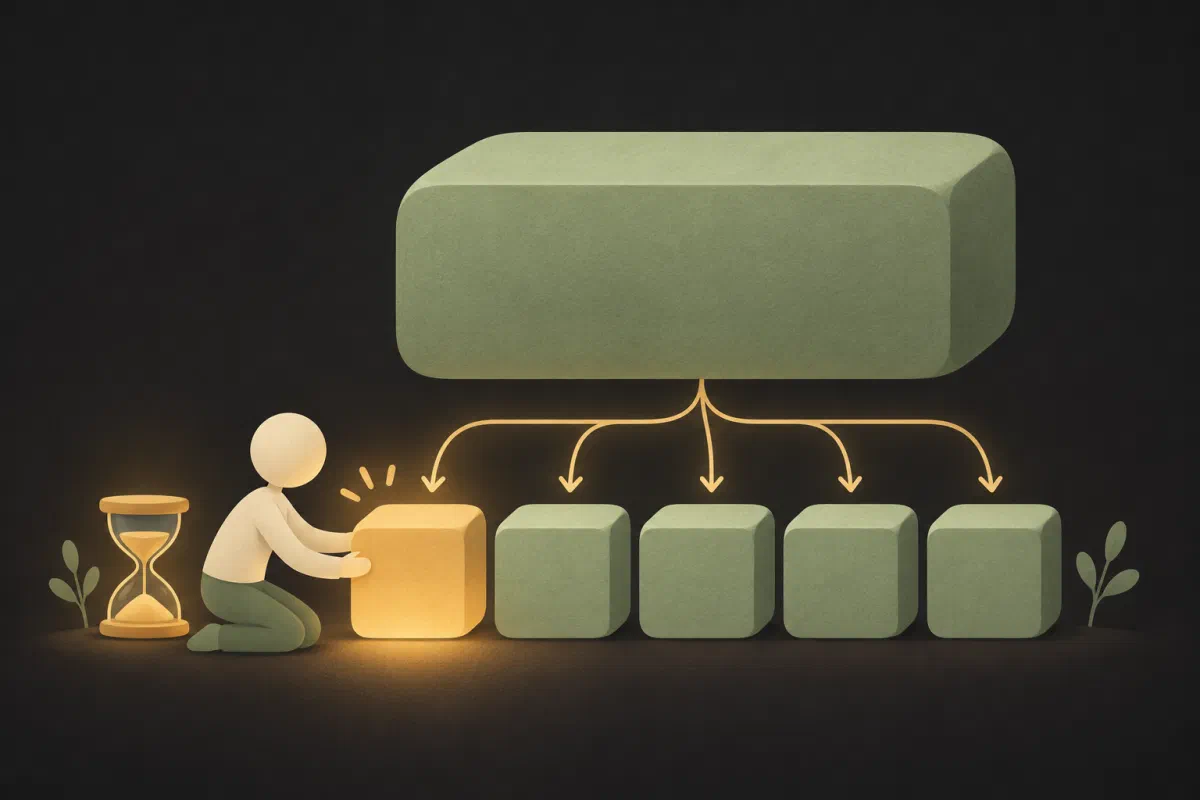
Gentle structure can help in those first weeks. Cyklio, our focus timer app, lets you set sessions from 10 to 60 minutes and a daily goal in hours, so you can start with a small target and raise it slowly. Rating a session as “not today” is a legitimate result, not a failure. You can also use the Cyklio Focus Timer on this site.
For what to do during the time off itself, see our guide to burnout recovery.
Summary
- Burnout is classed by the WHO as an occupational phenomenon, not a medical condition; a doctor will look at your whole health.
- See a doctor if exhaustion has lasted weeks, affects daily life, or self-help is not working. Get urgent help if you feel unsafe.
- Time off can help, but rest benefits can fade after you go back, so changes at work matter too.
- You choose how much to tell your employer; focus on what you need.
- Plan the return in writing: a return meeting, a phased start if possible, and regular check-ins.
Your next step: fill in the appointment checklist above today, even if only half of it, and book the appointment. If you are back at work, plan tomorrow as a few short focus sessions with a deliberately small daily goal.