

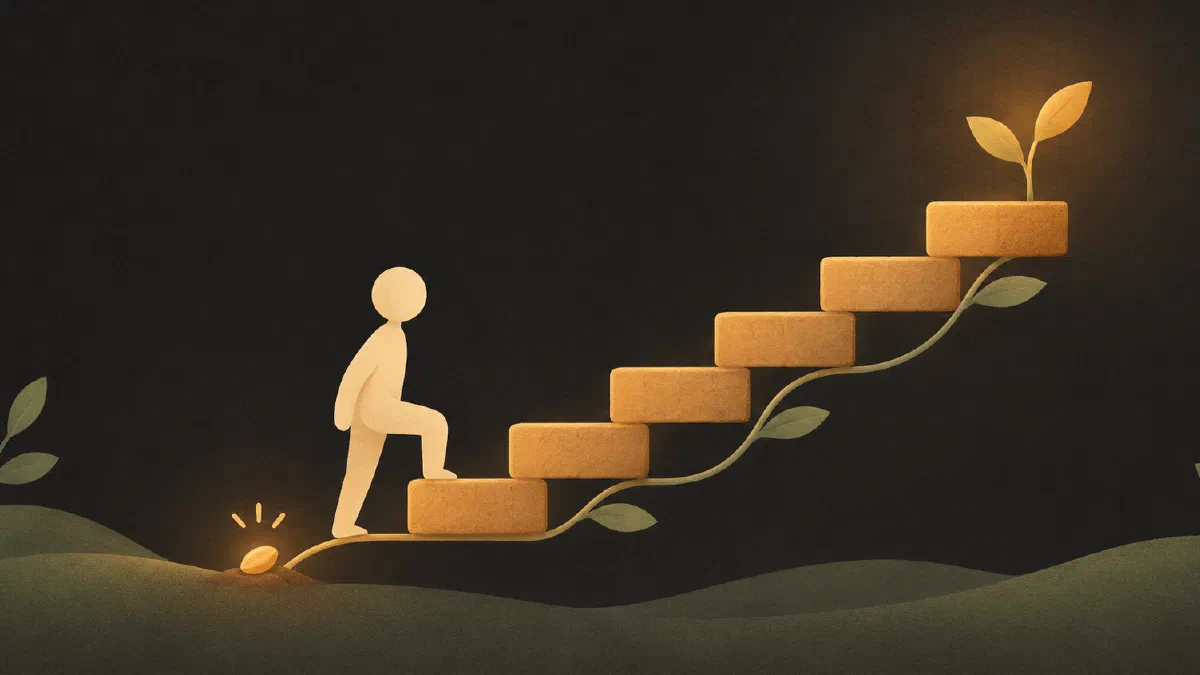
If planning, starting and keeping track of tasks feels harder for you than for others, it is natural to ask whether that can change. The honest answer is yes, partly, and the research is fairly clear about which kinds of effort pay off and which mostly do not.
Can executive function be improved? The short answer
Executive functions are the mental skills you use to hold information in mind, switch approach and hold back an urge so you can act on a plan. They are usually grouped as working memory, mental flexibility and self-control (Harvard Center on the Developing Child). If you want a fuller tour of the individual skills, see our guide to executive function skills; if you are wondering what it means when they break down, start with what executive dysfunction is.
On improvement, a major review states that executive functions “are trainable and can be improved with practice” (Diamond, Annual Review of Psychology). A later review of intervention studies concluded they can be improved at any age, but with important limits (Diamond and Ling, Developmental Cognitive Neuroscience). Those limits matter more for your day than the headline does.
What the research says about training executive function
Diamond and Ling’s review of many programmes drew several conclusions that are useful for adults (Diamond and Ling):
- Transfer is narrow. People mainly improve on what they practise. Wide transfer to unrelated skills has not been shown.
- Amount of practice matters. Whether gains appeared depended on the time spent practising, and the few studies that compared amounts mostly found more practice was better.
- The challenge has to grow. Skills improved when tasks kept getting a little harder, not when they stayed easy.
- Benefits fade when practice stops. Gains can last months, but they usually shrink over time without continued use.
- People who start with the most difficulty often gain the most.
Much of this research was done with children and older adults (Diamond and Ling), so treat it as a strong pointer rather than a precise forecast for a working adult. The practical message is still clear: improvement comes from repeated, slightly stretching practice in the situations where you want the skill. Age itself is a separate question, covered in does executive function decline with age.
Brain-training games: what they do and do not show
Brain-training apps are heavily marketed, but the evidence that they help in daily life is weak. A large review published by the Association for Psychological Science found that brain-training tasks improve performance on the trained tasks themselves, with less evidence for closely related tasks and very little evidence of better everyday cognitive performance (Association for Psychological Science, summary of Simons and others).
A meta-analysis of working memory training found short-term gains on working memory tests, but no convincing evidence of improvement on “far transfer” measures, meaning skills beyond the trained ones (Melby-Lervåg, Redick and Hulme). In children and adolescents with ADHD, a meta-analysis of randomised trials found that cognitive training improved working memory test scores but had limited effects on ADHD symptoms when raters were probably blind to the treatment, and no significant effect on reading or arithmetic (Cortese and others, JAACAP).
So if a game is enjoyable, play it for enjoyment. Do not count on it to make your inbox, your deadlines or your mornings easier.
Structured skills programmes for adults with ADHD
A more promising route for adults is not training raw capacity but learning and rehearsing concrete self-management skills, usually in a cognitive behavioural format.
- In a randomised trial with adults who were already taking ADHD medication but still had symptoms, CBT that taught, among other skills, organising and planning (a calendar and task list, breaking big tasks into steps) and handling distractibility led to greater symptom improvement than relaxation with educational support. Responder rates on the blinded assessor’s rating scale were 67% versus 33%, and among people who responded fully or partly, gains were maintained at 6 and 12 months (Safren and others, JAMA).
- In a trial of 88 adults, a 12-week group programme designed to build time management, organisation and planning produced larger improvements in inattentive symptoms than a supportive group; 42% versus 12% were classed as responders, and within the programme group, completing more home exercises was linked to greater improvement (Solanto and others, American Journal of Psychiatry).
- A Cochrane review found low-quality evidence that CBT-based treatments may help adults with ADHD in the short term, and noted a lack of long-term follow-up data (Lopez and others, Cochrane).
These programmes fit the training research: they practise real skills, in real life, with homework that repeats them. If you want to know what this kind of support looks like and how to find it, read our guide to therapy and support for executive dysfunction. Medication questions belong with your prescriber and are outside the scope of this article.
External supports: changing the task, not the brain
Another route to easier days is changing the task so it needs less executive effort. Researchers call this cognitive offloading: using a physical action, such as programming your phone to remind you of an appointment, to change what a task asks of your mind and reduce its mental demands (Risko and Gilbert, Trends in Cognitive Sciences). Using supports like this is not cheating, and it is not a sign of weakness.
The Job Accommodation Network lists workplace supports for executive functioning difficulties, including dividing large tasks into small chunks, setting a timer for a task, written instructions and checklists, sticky-note reminders, and taking time at the end of each day to set up for the next (JAN). For the chunking step specifically, see how to break down tasks with ADHD.
If-then plans are another well-studied support. A meta-analysis of 94 tests found that implementation intentions, plans in the form “if situation X happens, I will do Y”, had a medium-to-large effect on reaching goals (Gollwitzer and Sheeran). This meta-analysis looked at goal pursuit in general, not at ADHD specifically.
The table below pairs common difficulties with a support you can use today and a practice version that builds the skill over time.
| If this is hard | Support to use now | Practice version to build the skill |
|---|---|---|
| Remembering steps and requests | Written checklist or note at the point of use | Review the list each morning and tick items as you go |
| Starting a task | If-then plan: “When I open my laptop, I will open the report first” | Repeat the same start cue daily for two weeks |
| Staying with one task | A timer for one short focus block | Lengthen the block slightly once it feels easy |
| Estimating time | Write a guess, then time the task | Compare guesses with actual times weekly |
| Switching between tasks | Finish or park one task in writing before the next | Add a two-minute “where I stopped” note at each switch |

What makes executive function better or worse day to day
Executive functions are sensitive to your state. A review notes that stress, lack of sleep, loneliness and lack of exercise each impair them (Diamond, Annual Review of Psychology). A meta-analysis of short-term sleep deprivation found that working memory and other tests of executive attention are robustly affected by one night without sleep, with simple sustained attention hit hardest (Lim and Dinges, Psychological Bulletin).
As for exercise, Diamond and Ling found that aerobic or resistance training without a cognitive component produced little or no executive function benefit in the studies they reviewed (Diamond and Ling). In other words, protecting sleep and lowering stress helps you use the skills you have; it is not a substitute for practising them. If your difficulties come and go with tiredness, our article on executive function fatigue looks at that pattern.
Realistic expectations
- Expect specific gains, not a new brain. You will likely get better at the routines you rehearse, such as a morning setup or a weekly review.
- Expect supports to stay. Keeping your lists and timers for good is fine; needing them does not mean you have failed.
- Expect ups and downs. Stress and lost sleep impair executive functions, so a hard week can make skills feel lost for a while.
- No programme cures ADHD. Be wary of any product that promises it.
- Ask for help if difficulties are persistent and affect work or relationships. A clinician can look at causes and options.
A four-week practice plan for one skill
Training research suggests choosing one real skill, practising it often and raising the challenge gradually. Here is an illustrative example (not a real person) of how a working adult might apply that.
Example: Anna, a project coordinator, struggles to start her most important task each morning and drifts into email. She picks one skill: starting a planned task within 10 minutes of sitting down.
- Week 1: Support only. Each evening she writes tomorrow’s first task on a sticky note on her keyboard. Her if-then plan: “When I sit down, I start a 15-minute timer on the note’s task.” She logs whether she started within 10 minutes.
- Week 2: Repeat. Same cue, same task type. She notes what got in the way on missed days (for example, opening email first) and closes the email tab before leaving each evening.
- Week 3: Raise the challenge slightly. She extends the first block to 25 minutes and picks tasks that are a bit less clear-cut.
- Week 4: Review and keep. She looks at her log, keeps what worked, and decides whether to practise the same skill longer or add a second one.
Use this template for your own plan:
- Skill I want to practise: ________
- Where and when it should happen: ________
- Support I will use (list, timer, note, if-then plan): ________
- My if-then plan: “When ________, I will ________.”
- How I will record it (tick, note, rating): ________
- How I will make it slightly harder in week 3: ________
A focus timer such as the free Cyklio Focus Timer can give each practice block a clear start and end.
Summary and next step
Executive function can be improved, but mostly in narrow, practised ways. Brain-training games have weak evidence for everyday benefits. Structured CBT-based programmes have shown benefits for adults with ADHD, although the evidence is still limited in quality. External supports and better sleep and stress conditions help you function now, while repeated real-life practice builds the skill over time.
Your next step: pick one skill from the table above and run week 1 of the plan. If you want a simple way to log each practice block, Cyklio, our own focus timer app from Mindly 360, lets you set sessions from 10 to 60 minutes and rate each one afterwards. You can read more about the app, including the 7-day free trial.