

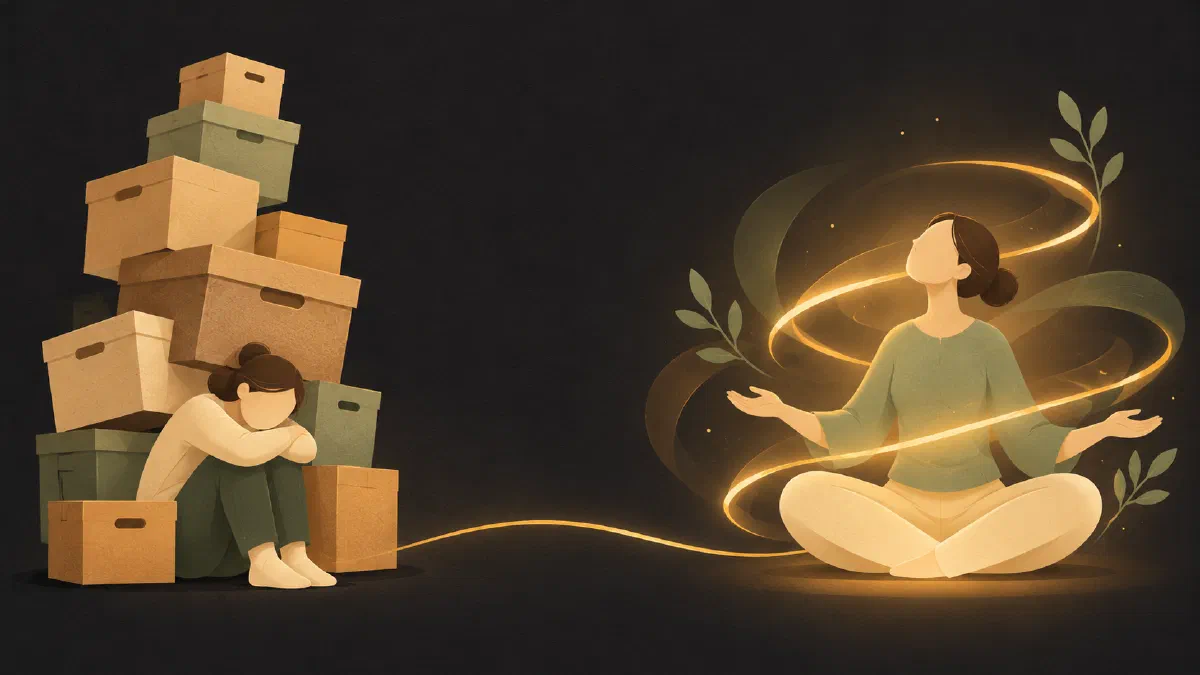
Not every postponed task is a failure. Some delays make the work better, and some quietly make everything harder. This article helps you tell the two apart before you decide to wait.
Can procrastination be a good thing?
It depends on what you mean by the word. In research, procrastination has a narrow meaning. In his widely cited review, Piers Steel defines it as voluntarily delaying an intended course of action despite expecting to be worse off for the delay. By that definition, procrastination is almost never good, because the expected cost is built in.
Everyday language is looser. People say “I’m procrastinating” about any task they have not started yet, including tasks they put aside for a good reason. That is where the useful question lives: not “is delay bad?” but “is this particular delay doing a job for me?”
A classic study shows why the answer matters. Following students across a term, Tice and Baumeister found that procrastinators reported less stress and illness early in the semester but more stress and illness late in the term, and received lower grades. The delay felt good at first; the bill came later. A good delay should not work like that.
Strategic delay vs avoidance: what is the difference?
Psychologists have a name for the helpful kind. In a review of procrastination research, Katrin Klingsieck compares procrastination with functional forms of delay, which she calls strategic delay. The distinction is about why and how you wait, not about how long.
A related idea is “active procrastination”. Chu and Choi described active procrastinators as people who prefer to work under pressure and decide on purpose to delay; in their student sample, this group delayed as much as passive procrastinators but looked more like non-procrastinators in their use of time, confidence and grades. The idea is debated. As a 2022 review summarises, Chowdhury and Pychyl found that active procrastination was not related to one self-report measure of procrastination and was negatively related to others, so they argued it is a purposeful, deliberate delay that should not be called procrastination at all. For a closer look at these labels, see the main types of procrastination.
In practice, the two kinds of delay tend to look like this:
| Strategic delay | Avoidance (procrastination) | |
|---|---|---|
| Why you wait | A reason you can say out loud: missing input, better timing, a higher priority | The task feels boring, unclear, risky or heavy, and waiting brings relief |
| Return point | A date, an event or a trigger | “Later”, “when I feel ready” |
| Feeling while waiting | Mostly neutral; the task is parked | Background guilt or dread; the task keeps tapping your shoulder |
| What happens meanwhile | Information arrives, ideas settle, other priorities get done | Usually nothing changes except the time left |
| Typical outcome | Similar or better work, little extra stress | Rushed work, extra stress near the deadline |
If you want a fuller comparison of these two ideas, our article on procrastination vs avoidance goes deeper.

When waiting can actually help
Creative work you have already started
The strongest evidence for helpful delay comes from creativity research. In two experiments and a workplace study, Shin and Grant found that moderate procrastination was linked with more creative ideas than low or high procrastination, particularly when people were intrinsically motivated or the job required creativity. The same study found that procrastination predicted lower task efficiency, so the benefit is specific to idea quality, not speed.
This fits research on incubation, the effect of setting a problem aside for a while. A meta-analysis by Sio and Ormerod found a positive incubation effect overall, larger for open-ended “divergent thinking” tasks, and larger after longer preparation periods. Filling the break with demanding work reduced the effect.
The practical lesson: helpful creative delay starts with engagement. You read the brief, sketch a few ideas, then step away. Delay before you have touched the problem is not incubation, because there is nothing to incubate yet.
Decisions that depend on information you do not have yet
Some tasks are better done later because the inputs are not ready: next quarter’s budget before this quarter’s figures close, a reply to a client before a colleague confirms a date. Waiting here is a reasonable planning choice, as long as you know what you are waiting for and check when it arrives.
Tasks that are genuinely lower priority
Choosing to postpone a low-value task so a high-value one gets your best hours is prioritising, not procrastinating. The test is whether you made the choice on purpose and the postponed task still has a place in your plan.
Rushing is not automatically better
Doing things early has its own trap. In experiments where students could carry one of two buckets, Rosenbaum and colleagues saw people pick the bucket closer to the start and carry it farther, a tendency they called pre-crastination, which they linked to a wish to reduce load on working memory. Ticking a task off quickly can feel good without being the best use of effort.
When procrastination hurts
Delay turns harmful when its main job is to change how you feel. Sirois and Pychyl argue that procrastination has a great deal to do with short-term mood repair, with the consequences typically borne by the future self. Steel’s meta-analysis found that task aversiveness, low self-efficacy and impulsiveness were among the strong and consistent predictors of procrastination, which is a useful list of warning signs: if a task feels unpleasant and you doubt you can do it well, “waiting for the right moment” deserves a second look.
Even the creativity findings have a limit. In the Shin and Grant study, people who procrastinated heavily generated fewer creative ideas than those who procrastinated moderately. A little distance helped; a lot did not.
A decision checklist: is this delay strategic?
Before you postpone something, run through these questions. Copy them into your notes or task manager and fill them in for one real task.
- Reason: Can I say in one sentence why later is better than now? ________
- Return point: When exactly will I come back to it (date, time or trigger)? ________
- First touch: Have I already engaged with it, even for ten minutes? Yes / No
- Change while waiting: What will be different when I return (new information, rested ideas, finished priority)? ________
- Cost check: If I wait, does the deadline or anyone else pay a price? ________
- Feeling check: Is the main thing I feel about this task relief at not doing it? Yes / No
How to read it:
- If you can fill in reason, return point and what will change, and the cost is low, the delay is probably strategic. Put the return point in your calendar.
- If you have not touched the task yet and it is creative or complex, do a short first session before you park it, so incubation has something to work with.
- If you cannot name the reason or the return point, or the main feeling is relief, treat it as avoidance and start a small first step today. General strategies for that are in our guide on how to stop procrastinating.
Examples from a working day
These are illustrative examples, not real cases.
The strategy document. Marta has to propose a new onboarding process by Friday. On Monday she spends 25 minutes reading feedback and listing rough ideas, then deliberately leaves it until Wednesday morning and fills the gap with routine admin. On Wednesday two ideas have combined into a clearer plan. This is strategic delay: she engaged first, chose a return time and kept the break light.
The budget decision. Tom is asked to choose between two software vendors, but finance will only confirm the budget next Tuesday. He writes down the two questions the budget will answer, books 30 minutes on Tuesday afternoon and moves on. The delay has a reason, a return point and a clear change in information.
The performance review email. Ana needs to give a colleague difficult feedback. Each morning she decides to “write it when I have more energy”. There is no new information coming, no return time, and a low hum of dread all week. On Thursday, the review deadline arrives and she writes it in a hurry. This is avoidance wearing the clothes of good timing.
If this last pattern feels familiar at work, strategies for procrastination at work offers practical next steps.
How to make a delay work for you
You can often turn a vague delay into a strategic one with a few small moves:
- Name the reason in writing. “Waiting for the final figures” is a reason. “Not in the mood” is a feeling, which is fine to notice but is not a plan.
- Touch the task first. Spend 10 to 25 minutes on the hardest-to-start part: open the file, list questions, write a messy outline.
- Set a concrete return point. Put a date and time, or a trigger such as “when Ola replies”, where you will see it.
- Keep the break light. If you are incubating ideas, routine tasks or a walk suit the gap better than another demanding project.
- Restart small. When the return point arrives, begin with one short session rather than waiting to feel ready again.
For steps 2 and 5, a timer can make the start feel finite. Cyklio, our focus timer from Mindly 360, lets you run sessions from 10 to 60 minutes and rate each one afterwards, which also gives you a record of which delays actually led to a restart. You can also use the Cyklio Focus Timer in your browser.
If you rely on deadline pressure for almost everything and it keeps costing you sleep or quality, it may help to read about why deadlines feel like the only switch that works. And if you want ways to use delay time well, for example by doing other useful tasks while you wait, see productive procrastination.
Summary
Delay is not the enemy; unplanned, avoidance-driven delay is. Research supports waiting when you have already engaged with a creative problem, when you need information that is on its way, or when something more important deserves your time first. It does not support putting tasks off to escape how they feel, which tends to bring short-term relief and long-term stress.
Your next step: pick one task you are currently postponing and fill in the six-question checklist above. If it passes, book the return point. If it does not, start a 10-minute session on it today.