


You open your phone to check one message, and twenty minutes later you are still scrolling. It is tempting to call that a “dopamine addiction”. This page explains what the science actually supports, how the popular phrase differs from how clinicians use the word addiction, and what you can do to check your phone less, starting today.
Is dopamine addiction real?
Not as a diagnosis. Dopamine is a chemical messenger your brain uses all the time, and you cannot meaningfully be “addicted” to something your body makes and needs. No psychiatric manual lists dopamine addiction, and none lists phone addiction either.
The American Psychiatric Association says gambling disorder is the only behavioral addiction identified in DSM-5-TR. Internet Gaming Disorder appears only in the section for conditions that need further research, and the APA states that it is limited to gaming and does not include general internet, social media or smartphone use. The World Health Organization’s ICD-11 includes gaming disorder, described in terms of gaming, not phones in general.
So when people say “dopamine addiction”, they usually mean something real but different: a strong, hard-to-break habit of checking and scrolling. That is worth taking seriously. It just is not a medical condition with that name.
What dopamine actually does
Dopamine is often called the “pleasure chemical”, but research points in a different direction.
- It signals surprise about rewards. A review by neuroscientist Wolfram Schultz describes how most dopamine neurons fire more when a reward is better than predicted, stay at baseline when it is exactly as expected, and dip when it is worse. This “prediction error” helps the brain learn which actions are worth repeating.
- It drives wanting more than liking. A review in Neuron concludes that the brain’s dopamine system may not generate pleasure after all; raising dopamine increases the motivation to pursue a reward without making it more enjoyable.
- It helps form habits. The US National Institute on Drug Abuse (NIDA) explains that dopamine has more to do with getting us to repeat pleasurable activities than with producing pleasure, and that its signals change brain connections so an activity becomes easier to repeat.
That distinction matters for phones. Many people notice that they keep scrolling even when they are not enjoying it much. That fits the “wanting without liking” idea better than the “pleasure addiction” story. If you want the wider picture on motivation, see our explainer on whether dopamine means motivation.
The popular term versus clinical use
The word “addiction” means different things in everyday talk and in medicine. This table compares the most common claims with what the sources above support.
| Popular claim | What people usually mean | What the evidence says |
|---|---|---|
| “I’m addicted to dopamine” | I keep seeking quick, easy rewards | Not a diagnosis; dopamine is a normal brain chemical involved in learning and motivation |
| “My phone gives me dopamine hits like a drug” | Checking feels compelling | NIDA describes drugs as causing surges much greater than the smaller bursts from everyday rewards |
| “Phone addiction is official now” | It feels as serious as an addiction | Neither DSM-5-TR nor ICD-11 lists it; the APA excludes smartphones from its gaming proposal |
| “Scrolling is just a habit” | It’s nothing to worry about | Partly true; habits can still cost sleep, focus and relationships, and some people need help changing them |
Researchers are also cautious about the addiction label for phones. A 2018 review in the Journal of Behavioral Addictions found not enough support for calling smartphone overuse an addiction and suggested “problematic use” instead, noting that the severity is much lower than in substance addictions. Another group warned against overpathologizing everyday life, that is, research that labels more and more ordinary activities as new “addictions” using checklist-style studies with weak theoretical grounding.
The same misunderstanding sits behind “dopamine fasting”. A Harvard Health article explains that dopamine does not fall when you avoid stimulating activities, so a “dopamine fast” does not actually lower your dopamine and the popular version of the idea misreads the science. Whether a detox-style break helps people with ADHD is a separate question, covered in dopamine detox for ADHD.
Why phones and scrolling are so hard to put down
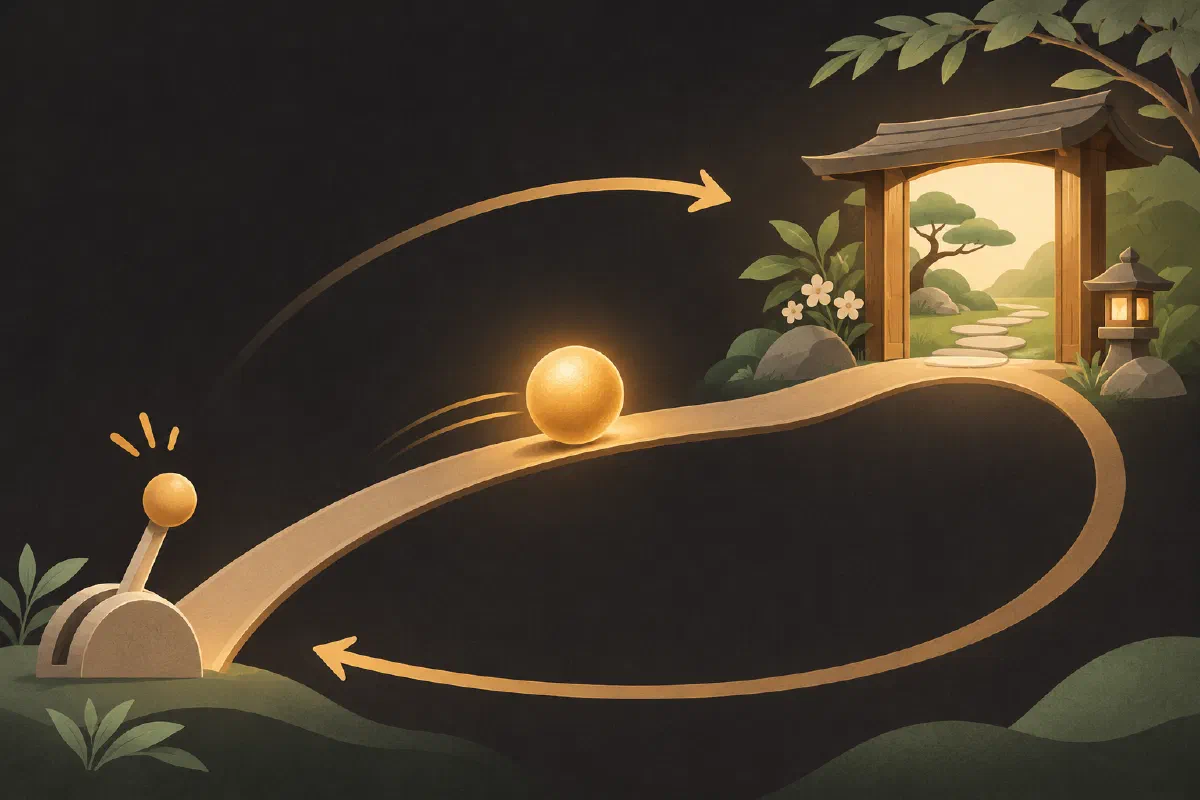
If dopamine addiction is not the explanation, what is? A more useful explanation is reward learning combined with habit.
Rewards shape checking. In an analysis of more than one million posts from over 4,000 social media users, researchers found that people spaced their posts to maximize the rate of social rewards such as likes, in a pattern that fits a reward-learning model. In other words, likes and replies work like small rewards that change behaviour over time. That study measured behaviour, not brain chemistry, so it does not show “dopamine hits” directly.
Unpredictable rewards keep you looking. Because dopamine neurons respond most to rewards that are better than predicted, a feed where the next item might be great is a plausible recipe for repeated checking. This is a reasonable inference from the basic science, not something studies have measured during scrolling, so treat it as an explanation rather than a proven mechanism.
Small rewards are not drugs. NIDA describes how drug-driven dopamine surges teach the brain to seek drugs at the expense of other goals, and how tolerance builds. Comparing a notification to cocaine overstates the case and can make change feel hopeless. Treating checking as a habit instead gives you concrete things to change, like the steps below.
Checking has a cost for focus. Even a buzz you ignore takes a toll. In a lab study, simply receiving a notification, without answering it, significantly disrupted performance on an attention-demanding task, with an effect comparable to actually using the phone.
Phone checking and ADHD
If you have ADHD, you may find your phone harder to put down than other people do. Research supports a link, though not a simple cause. In a survey of 273 adults, higher ADHD symptom scores were positively correlated with problematic phone use, with inattention a key predictor. The study used questionnaires at one point in time, so it cannot show that one causes the other.
That is not a character flaw, and it is not proof of ADHD either. For what research says about dopamine in ADHD itself, read ADHD and dopamine. If phone overuse is your main concern, a calm phone addiction self-check can help you see how much it is really costing you.
Practical steps to reduce compulsive checking
Since phone checking behaves like a learned habit, the most useful steps target the cue, the effort and the replacement. Steps 2 and 3 have direct study support; the others are common habit strategies, so judge them by your own results.
- Spot your trigger for three days. Before each unplanned pickup, note what was happening: a hard task, boredom, waiting, a buzz.
- Batch your notifications. In a randomised field experiment with 237 participants, people whose notifications arrived in three batches a day reported better attention, productivity and mood, lower stress and more sense of control. Switching notifications off entirely brought fewer benefits and more anxiety, so batching may be a gentler start.
- Silence the phone during one focus block a day. Given the attention cost of a single notification, a silenced block protects your hardest task. Pair it with our free focus timer so the end of the block is clear.
- Add friction. Put the phone in another room or a drawer during the block, log out of the app you scroll most, or move it off your home screen. The goal is a few seconds of delay, enough to notice the urge.
- Plan a replacement. Decide what you do instead when the trigger hits, such as standing up, refilling water or writing the next small step of your task. If you want a list of planned, satisfying breaks, a dopamine menu is one popular way to build it.
- Review once a week. Check your phone’s screen-time report and keep only what worked. For a fuller plan, see our guide to reducing screen time when your job is on a screen.
Worked example: a designer’s afternoon
Ola (an illustrative example, not a real case) is a designer who works from home. Around 14:00, when she starts the hard part of a layout, she picks up her phone “for a second” and loses 15 to 20 minutes most days.
For three days she logs her pickups and sees that most happen right after opening a difficult file. She sets notifications to arrive at 10:00, 13:00 and 17:00, puts the phone on a shelf across the room, and starts a 25-minute focus block as soon as she opens the file. Her replacement for the urge is writing down the next tiny step on a sticky note. She still checks her phone, but now mostly at the end of a block, when she decided to.
Your checking log
Copy this into a notebook or notes app for three days.
| Time | What was I doing just before? | What did I want (relief, news, contact, a break)? | What could I do instead next time? |
|---|---|---|---|
When to get help
Small changes are a sensible first step for everyday overuse. Consider talking to a GP, doctor or therapist if your phone use is seriously harming your sleep, work, studies or relationships, if you have tried several times to change it without success, or if you mainly use your phone to escape low mood, worry or loneliness that feels hard to manage. The phone may then be a sign of something worth addressing in its own right.
If you are in crisis or thinking about harming yourself, contact your local emergency number or a crisis line in your country straight away.
This article is educational and does not replace advice from a doctor.
Summary and your next step
- Dopamine addiction is not a diagnosis, and neither is phone addiction.
- Dopamine helps the brain learn and want rewards; it is not simply a pleasure chemical.
- Likes and new content can act as small rewards that shape behaviour, but they are not the same as drugs.
- Compulsive checking responds to habit tools: know your trigger, batch notifications, add friction and plan a replacement.
- If the costs are serious and change keeps failing, get professional support.
Your next step: pick one task for tomorrow, silence your phone and run a single focus block on it. If you want to see your progress over the week, you can do this in Cyklio, our own focus timer app, and rate each session as full focus, distractions or not today.