

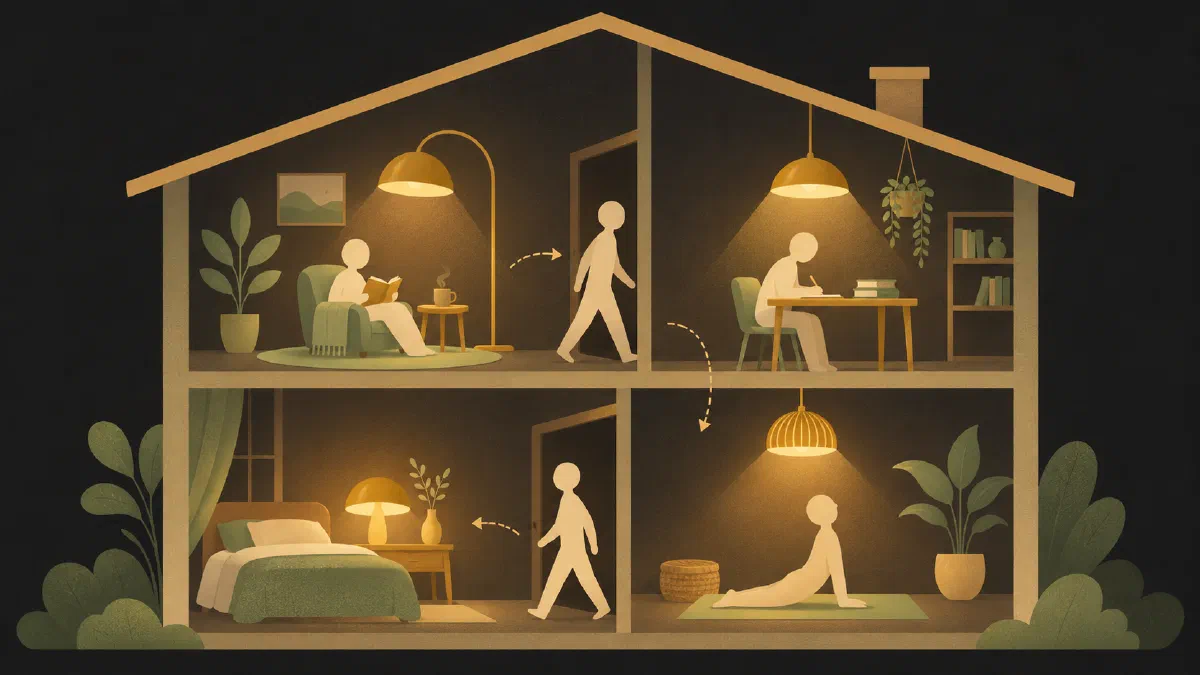
ADHD is often pictured as a childhood problem with fidgeting in class, but for many adults it shows up in quieter places: a missed bill, a half-finished report, a forgotten promise to a partner. This guide describes where ADHD commonly affects adult daily life, what the research says, and which practical supports and next steps make sense.
This article is educational and does not replace advice from a doctor. Recognising yourself in these descriptions is not a diagnosis; only a qualified clinician can assess you for ADHD.
What ADHD in adults looks like
ADHD (attention-deficit/hyperactivity disorder) is, in the NIMH’s words, a persistent pattern of inattention and/or hyperactivity and impulsivity that makes it hard to function in at least two areas of life. The NHS lists adult symptoms such as being easily distracted or forgetful, finding it hard to organise your time, finding it hard to follow instructions or finish tasks, losing things often, feeling restless, interrupting conversations and making quick decisions without thinking about the consequences. Most people with ADHD have symptoms of both types, although some only show signs of one.
In adults the picture can change. The CDC notes that hyperactivity may decrease or appear as extreme restlessness, and that symptoms can become more severe when the demands of adulthood increase.
Adult ADHD is not rare. An international consensus statement cites a meta-analysis of 20 studies estimating that about 2.8% of adults meet criteria for ADHD.
Where everyday challenges show up
The NIMH says that ADHD symptoms interfere with daily functioning, and that adults with ADHD often have a history of work problems or strained relationships. The CDC puts it simply: symptoms can cause difficulty at work, at home or with relationships. UK guidance from NICE says that, for a diagnosis, symptoms should cause at least moderate impairment and occur in two or more important settings, such as social, family, educational or work settings. In other words, the effects are not limited to one corner of life.
Below are the four areas most often described.
At work
The NIMH describes adults who may find it challenging to stay organised, stick to a job, keep appointments, perform daily tasks or complete large projects. In practice this might look like:
- starting the day with a clear plan and ending it with the plan untouched
- strong work on interesting tasks, with routine admin piling up
- missed details in long documents or instructions
- deadlines that seem far away until they are suddenly tomorrow
Research suggests the effect can be measurable. A WHO survey of more than 7,000 workers in ten countries found that ADHD was associated with about 22 extra days a year of lost role performance compared with similar workers without ADHD. That is an average across many people, not a forecast for you. If work is where things feel heaviest right now, our guide to feeling overwhelmed at work covers that situation in more detail.
At home
At home there is often no boss, no deadline and no colleague to notice, which can make it harder. Health bodies list forgetfulness, losing things like keys, wallet or phone and trouble finishing tasks among common symptoms. Everyday versions include laundry left in the machine, paperwork in piles, appointments booked late, or a chore abandoned halfway because something else caught your attention.
The CDC notes that under high stress ADHD can make daily tasks harder and make healthy habits, such as regular exercise, nutrition and sleep, harder to keep up. Safety can be affected too: the consensus statement cites a meta-analysis of 32 studies that found a 40 to 50% greater risk of accidental physical injuries in people with ADHD.
With time
Trouble organising time is one of the symptoms the NHS lists, and the NIMH mentions poor time management, planning or organisation, and procrastination. NICE guidance also names organisation, time management and motivation as areas where ADHD symptoms are likely to affect a person’s behaviour.
You may hear this called “time blindness”. That is a popular term, not a diagnostic criterion, and the lab research behind it is mixed: a review of a decade of adult studies found that some studies found deficits in time estimation, time reproduction or time management while others found no clear link, and that research in adults is scarce. We look at this more closely in what time blindness is and what the evidence says.
In relationships
Relationships can feel the effects of forgetting plans, interrupting, running late or reacting quickly. A review of the research concluded that much research points to adults with ADHD having short-lived and discordant romantic relationships, while noting that less is known about what explains or improves these difficulties.
Emotions play a part. A meta-analysis of 13 studies with 2,535 participants found that adults with ADHD showed significantly higher levels of emotion dysregulation than healthy controls, with emotional lability (quick mood shifts) showing the strongest effect. The authors conclude that their findings support emotion dysregulation as a core feature of ADHD. For shared systems and conversation tips, see ADHD and relationships.

Everyday challenges and practical supports at a glance
This table pairs common challenges with supports people use. The supports come from health bodies and from a qualitative interview study of 32 adults with ADHD in Zurich, which found organisational strategies such as reminder apps, checklists and routines were the most often reported. Small interview studies describe what people do; they do not prove what works for everyone.
| Area | What it can look like | Practical support people use |
|---|---|---|
| Work | Projects stall, admin piles up | Written instructions and help planning tasks as workplace adjustments (NHS) |
| Work | Open-plan noise pulls focus | Quieter workspace or other reasonable adjustments (NHS); low-stimulus settings (Canela et al.) |
| Home | Chores started, not finished | Checklists and a fixed daily routine (Canela et al.) |
| Home | Keys, wallet, phone go missing | One fixed spot for essentials (a common strategy) |
| Time | Appointments forgotten, lateness | Electronic reminders on a phone or laptop rather than easily lost paper notes (Canela et al.) |
| Relationships | Forgotten plans cause friction | Shared calendar and an agreed way to talk about slips (a common strategy) |
| Energy and mood | Restlessness, stress builds | Regular exercise and good sleep habits (NHS) |
In the US, the NIMH notes that adults whose symptoms impair their work may qualify for reasonable accommodations under the Americans with Disabilities Act, and some adults work with an ADHD coach on executive function skills. The CDC adds that accommodations can help with staying on task or limiting distractions, though not everyone with ADHD needs them.
A worked example: one Tuesday, two ways
This is an illustrative composite, not a real person’s story.
Without supports: Sam, a project coordinator, plans to finish a client report by noon. An email about next month’s event pulls him in, then a chat message, then a search for a file he saved somewhere. At 11:50 the report is a third done. He forgets the dentist at 4 pm, and at home he promised his partner he would book the car service, which he also forgets. By evening he feels like he failed at everything, although he worked hard all day.
With supports: The night before, Sam writes one line on a sticky note on his laptop: “Report section 2 first.” At 9:00 he closes email and starts a 25-minute focus session, then another. The dentist reminder pops up at 3:15 with travel time built in. The car service goes on the shared calendar with his name and a reminder at lunchtime, when he has his phone in hand anyway. The report is not perfect, but it is sent by 1 pm.
Nothing about Sam changed between the two versions. The supports did some of the remembering and starting for him. That shift, from blaming yourself to adjusting the setup, is also the idea behind focusing on what you can control.
When and where to seek an assessment
The NHS advises making an appointment with a GP if ADHD symptoms are affecting your studies, work or relationships. The GP may consider other conditions that could explain the symptoms and may refer you for an assessment with a mental health professional who specialises in ADHD. NICE guidance says ADHD should only be diagnosed by a specialist psychiatrist, paediatrician or other appropriately qualified professional, based on a full assessment that includes discussion of behaviour and symptoms in the different settings of everyday life. In the US, the NIMH says a primary care provider or mental health professional may be involved in diagnosing ADHD, and the CDC notes that a check for other conditions such as anxiety, depression or sleep problems may be part of it.
Because the assessment looks at daily life, it can help to bring notes. A simple checklist:
- Three to five specific examples from work, home, time and relationships, with roughly when they happen.
- Whether similar problems were present in childhood. The NIMH notes that adults must have had symptoms before age 12, so a clinician may talk with people who know you well or look at school reports.
- Anything else affecting you: sleep, mood, anxiety, stress or substance use.
- What you have already tried and what helped.
What happens next, including the steps of the assessment and treatment options, is covered in how an adult ADHD assessment works and our overview of ADHD treatment.
If you are struggling with your mental health or having thoughts of harming yourself, please do not wait for an assessment. The NHS notes that people with ADHD have a higher risk of suicide. Contact your local emergency number or a crisis line in your country straight away.
Summary and one next step
ADHD can affect daily adult life at work, at home, with time and in relationships, through distraction, forgetfulness, trouble with time and organisation, restlessness and quick reactions. Research links it with more lost work performance and relationship strain on average, but every person’s pattern is different. Supports such as reminders, checklists, routines, quieter spaces and reasonable adjustments can take some load off, and a GP or other clinician is the right place to ask about an assessment.
Next step: pick the one area from the table that costs you most this week and try one support for seven days. If starting tasks is the sticking point, open the Cyklio Focus Timer and run a single short session on the task you have been putting off.