

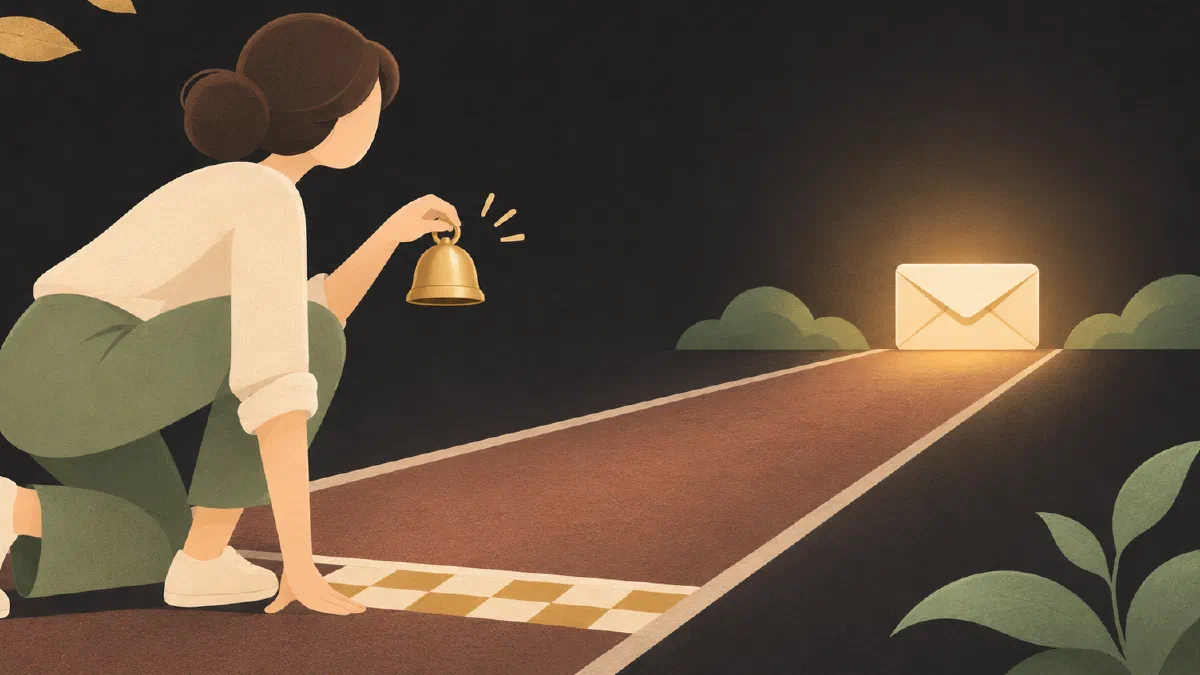
The report is due Friday, the document is open, and you have rewritten the first sentence four times. Then you check email. This guide shows a simple way to start writing when you keep avoiding it: a 5-minute outline, a deliberately messy first draft and short 10-minute sessions, with a worked example of a work report and a template you can copy.
Why writing is so easy to put off
Writing is a classic task to delay. Psychologist Piers Steel’s meta-analysis of 691 correlations found that some of the strongest and most consistent predictors of procrastination are how unpleasant a task feels, how far away its deadline or payoff is, how confident you feel about doing it, and how impulsive or distractible you are. A report due next week, which you are not sure how to begin, ticks most of those boxes.
Writing is also several jobs pretending to be one. Writing researcher Ronald Kellogg describes how deciding what to say and how to say it consumes the writer’s attention and other resources of working memory, and how planning ideas, producing sentences and reviewing them all draw on the limited capacity of executive attention. When you try to think, write and judge every sentence at once, the task feels heavier than it is.
Fear and perfectionism add to that. The University of North Carolina Writing Center lists fear of failure, perfectionism and dislike of re-reading imperfect drafts among the common reasons people put off writing. If you want to dig into the perfectionism side, see our comparison of procrastination and perfectionism.
The practical conclusion: do not wait to feel motivated. Lower the cost of starting by splitting writing into smaller, separate jobs. (For motivation in general, beyond writing, see our guide on how to get motivated to work.)
Step 1: Make a 5-minute outline first
An outline here is not a formal plan with numbered headings. It is a quick sketch that answers “what am I going to say?” before you write a single proper sentence, so that drafting becomes the only job on the table.
Writers differ here. Kellogg notes that among experienced scientists, some plan extensively before drafting, while others jump right in with a very rough draft and revise, and that the task and the writing tool both influence which strategy people choose. A very short outline is a middle path: enough structure to start, not so much that planning becomes a new way to delay. Treat the 5-minute limit as a common strategy, not a research finding.
How to do it:
- Write one sentence about the purpose. “This report tells my manager whether the project is on track and what I need from her.”
- Name the reader and what they need to decide or do.
- List 3–5 rough headings in the order the reader needs them. Fragments are fine.
- Add one fact or note under each heading. Numbers, names, a link you will need.
- Star the easiest section. That is where you will start.
If you cannot even list headings, try a short freewrite first. The UNC Writing Center describes freewriting as writing whatever comes to mind, often with a time limit, without worrying about style, spelling or grammar, and advises that you keep on writing even if you believe you are saying nothing. Afterwards, you pick out the useful bits and turn them into headings.
Step 2: Write a messy first draft
The messy-first-draft method means writing the whole piece, or one section, quickly and badly on purpose, then fixing it later. The UNC Writing Center reminds procrastinating writers that a first draft does not have to be perfect, and suggests writing the easiest part first or even turning off the screen to quiet your inner critic.
The opposite approach is the one many of us slip into. Kellogg describes the strategy of attempting to produce a perfect rather than a rough first draft, which involves extensive reviewing while you draft. That approach suits some writers, but if you keep stalling on the first paragraph, it is probably not working for you right now.
Rules for a messy draft:
- No deleting. If a sentence is wrong, write a better one below it and keep going.
- Use placeholders. Write [CHECK NUMBER] or [NAME?] instead of stopping to look things up.
- Talk it out. Write the way you would explain it to a colleague, then make it formal later.
- Start at the starred section, not at the introduction. Introductions are often easier to write last.
- Keep editing for later. The UNC Writing Center advises keeping editing and proofreading separate and recommends putting a draft aside before you edit it, because text you have just written is too familiar to judge well.

Step 3: Write in 10-minute sessions
A short session lowers the stakes. The UNC Writing Center recommends working in blocks of an hour or less and setting time limits rather than waiting for a long free day. Ten minutes is an even smaller version of the same idea: short enough that “I’ll just do ten minutes” feels possible on a bad day. The exact length is a practical choice, not a proven optimum; if 10 minutes goes well, extend the next session.
Decide in advance when you will start. An if-then plan, which researchers call an implementation intention, links a cue to an action: “If I get back from lunch, then I open the report and write the risks section.” A meta-analysis of 94 tests found these plans had a medium-to-large effect on goal attainment and helped people get started on their goals.
A plan for one 10-minute writing session
- Before you start (1 minute): close email and chat, open only the document and your outline.
- Choose one section from the outline and write its heading at the top of the page.
- Start a timer for 10 minutes. You can use our free focus timer or any timer you like.
- Write without editing until the timer ends. Placeholders are welcome.
- When the timer ends, write one line about what comes next. “Next: risks section, start with the supplier delay.”
- Decide: another 10 minutes, a short break, or stop for today.
That last note matters more than it looks. Research by Sophie Leroy and Theresa Glomb, reported by the University of Washington, found that a short ready-to-resume plan, noting where to resume and what is left, reduced lingering thoughts about the unfinished task and improved performance on the next task. The study did not test whether the note speeds up your return to the writing itself, but it does save you from re-reading everything from the top.
If you like very short starts, our guide to a short timer to start tasks has more ways to use one.
What is stopping you? Pick the matching fix
| What you notice | Likely problem | Try first |
|---|---|---|
| “I don’t know where to begin.” | No plan for content | 5-minute outline, then the easiest section |
| “Every sentence sounds wrong.” | Drafting and judging at once | Messy-draft rules: no deleting, placeholders |
| “I need a whole free afternoon.” | Task feels too big | One 10-minute session, scheduled with an if-then plan |
| “I keep checking messages.” | Distractions are one click away | Close email and chat before the timer starts |
| “I don’t know where I left off.” | Hard to restart | End each session with a “next” note |
| “I wasted the whole morning, so why bother.” | Guilt after a lapse | Forgive the lapse, then one 10-minute session |
Worked example: writing a monthly status report
This is an illustrative example, not a real person. Anna is an operations coordinator. Her monthly status report for her manager is due at 17:00. By 11:00 she has opened the file three times and written nothing.
| Time | What Anna does | Result |
|---|---|---|
| 11:00 (5 min) | Outline: purpose sentence, four headings (Summary, Progress, Risks, Requests), one note under each. Stars “Progress” as easiest. | A plan on half a page |
| 11:05 (10 min) | Session 1: writes Progress as a messy list of what shipped, with [CHECK %] for one figure. Ends with “Next: Risks, start with supplier delay.” | Rough Progress section |
| 13:30 (10 min) | Session 2, triggered by her if-then plan “after lunch, open the report”. Writes Risks the way she would explain them to a colleague. | Rough Risks section |
| 13:45 (10 min) | Session 3: Requests and a two-line Summary, written last. | Complete messy draft |
| 15:30 (10 min) | Session 4, editing only: fills placeholders, cuts repetition, fixes tone. | Finished report, sent at 15:45 |
Notice what she did not do: she never tried to write the summary first, never edited during drafting and never waited for a free afternoon. About 45 minutes of writing time was spread across a day that also had meetings.
Fill-in template: your writing starter card
Copy this into a note before your next writing task.
- What I am writing: ____________________
- Who will read it and what they need: ____________________
- Purpose in one sentence: ____________________
- Headings (3–5): ____________________
- Easiest section (start here): ____________________
- If-then plan: If ____________________, then I open the document and write ____________________.
- Session length: 10 minutes
- Next note (fill in at the end of each session): ____________________
- Editing session planned for: ____________________
If you missed your writing time
It happens. What you do next matters more than the lapse. In a review of research on procrastination and mood, psychologists Fuschia Sirois and Timothy Pychyl note that bad feelings about having procrastinated tend to feed more procrastination, whereas reducing negative feelings about past procrastinating can reduce procrastination, citing a study of self-forgiveness in students. The research is with students rather than people writing reports at work, but the practical point is simple: beating yourself up rarely gets the page written. Say “that didn’t go to plan”, pick the easiest section and run one 10-minute session. If guilt about putting things off is a regular companion, our article on procrastination guilt goes deeper.
If starting writing is hard for you because of ADHD, our guide to ADHD and writing at work adapts these steps for emails and reports.
Summary
- Writing is easy to avoid because it feels unpleasant, uncertain and big, and because it asks you to plan, write and judge at once.
- Split the jobs: a 5-minute outline, then a messy first draft, then a separate editing session.
- Work in short, planned sessions of about 10 minutes and end each one with a note about what comes next.
- After a lapse, forgive yourself and restart with the easiest section.
Your next step: pick one piece of writing you have been avoiding, fill in the starter card and run one 10-minute session today. If you want a timer that also tracks a daily goal, Cyklio, our focus timer app from Mindly 360, offers sessions from 10 to 60 minutes, lets you rate each session and comes with a 7-day free trial, no account or card needed.