

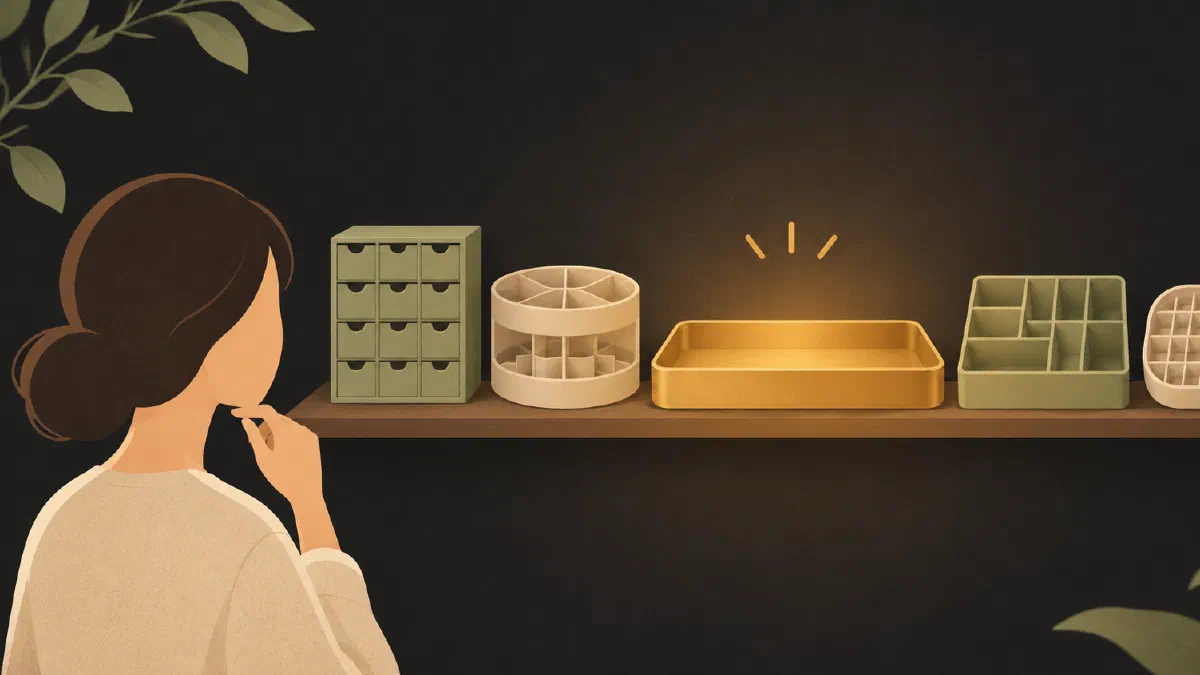
Some procrastination is not about the task at all. It is about a quiet rule in your head, such as “I work best under pressure” or “I’ll start when I feel ready”, that makes waiting feel like the sensible choice. This guide names the most common of these beliefs, offers a more flexible version of each, and shows you how to test them with small experiments instead of willpower.
What is a limiting belief about procrastination?
“Limiting belief” is a popular self-help term, not a clinical one. Clinical psychologists at Western Australia’s Centre for Clinical Interventions (CCI) describe the same idea as unhelpful rules and assumptions: the “shoulds”, “musts” and “can’ts” that sit underneath procrastination. In their words, a rule becomes unhelpful when it is inaccurate and inflexible.
These beliefs often show up as reasonable-sounding excuses. CCI points out that a procrastination excuse usually starts with something true and then draws an unhelpful conclusion: “I am really tired” becomes “so I am better off doing it after I have rested”. The tiredness is real; the idea that later will be easier is what to question.
It also helps to be honest about how much beliefs explain. In a large meta-analysis, Piers Steel found that the link between procrastination and irrational beliefs in general was “irregular and often weak”, with an average correlation of about .17. The link with low self-efficacy, meaning low confidence that you can do the task, was much stronger, at about −.38. So the beliefs that seem to matter most concern your own ability, and Steel suggests those change mainly through experience.
To spot these patterns in daily life first, see real-life procrastination examples.
Seven common beliefs and how to reframe them
The table pairs each belief with the grain of truth inside it, a more flexible version, and a small test. The reframes in the third column follow the style of helpful conclusions suggested by CCI, adapted for a working day.
| Belief | The grain of truth | A more flexible version | A small test |
|---|---|---|---|
| “I work best under pressure.” | Deadlines do focus attention. | “Pressure helps me finish, but it is not the only way I can start.” | Do one task last-minute and a similar one early; compare quality and stress. |
| “I need to feel ready (or in the mood) first.” | Some days really are harder. | “I can make a small start before I feel ready.” | Rate your mood 0–10, work 10 minutes, rate again. |
| “I need a big block of time.” | Some tasks need deep focus. | “I can do part of it with the time I have.” | Alternate “all at once” with “bits and pieces” for a week. |
| “I’ll have more time or energy later.” | Your calendar may look emptier next week. | “Later will probably look like today.” | Write down when “later” actually arrives. |
| “It has to be perfect, or I’ll fail.” | Quality matters to you. | “Good enough on time beats perfect and late.” | Hand in one deliberately “good enough” piece and note the reaction. |
| “I’m just not capable of this.” | The task may be new or hard. | “I can learn this one step at a time.” | Finish the smallest possible piece and count it. |
| “I shouldn’t have to do this.” | You may not have chosen the task. | “I can do things I did not choose and still be in charge of how.” | Decide when and how you will do it, then do the first part. |
“I work best under pressure”
This belief is partly true for some people. Researchers Chu and Choi described “active” procrastinators who prefer pressure and decide on purpose to delay. In their study, these people delayed as much as “passive” procrastinators, the ones who are stuck in indecision, but were more similar to non-procrastinators in how they used time, their confidence and their results. The difference between strategic delay and avoidance is covered in can procrastination be good?.
For many people, though, the belief does not survive a closer look. In two longitudinal studies of students, Tice and Baumeister found that procrastinators reported less stress and illness early in the semester, but more later on, were sicker overall and earned lower grades. The pressure felt productive, but the full picture was worse.
The honest test is to compare. CCI suggests alternating a “last minute” approach with an “ahead of time” approach on several similar tasks, then noting how you felt, how long each took, the quality of the work and whether you met the deadline.
“I need to feel ready first”
Waiting to feel rested, motivated or inspired sounds sensible, but CCI notes that if you wait for all the right conditions to line up, you may wait a very long time. The same module observes that once people take even a small step, their desire to keep going often increases.
This fits with research describing procrastination as a form of short-term mood repair, where the costs are “typically borne by the future self”.
“I’ll have more time later”
This belief leans on a well-documented bias. In a series of studies, Buehler, Griffin and Ross found that people consistently underestimate how long their own tasks will take, largely because they imagine how the task will go instead of remembering how similar tasks went before. In one of the studies, when participants were asked to connect their prediction to relevant past experiences, the optimistic bias disappeared. So ask not “Will I have time later?” but “What happened the last three times I said that?”
“It has to be perfect” and “I’m not capable”
CCI groups beliefs such as “I must do things perfectly” and “If I try, then I will only fail” under fear of failure or disapproval, and assumptions such as “if I try things, then my inadequacies will show through” under low self-confidence.
Perfectionism gets a lot of blame, but in Steel’s meta-analysis procrastinators were actually less likely, not more, to be perfectionists. He suggests that fear of failure gets its link to procrastination through low self-confidence (low self-efficacy), which does have a strong, dependable connection. Steel also notes that such confidence is “bought largely with empirical confirmation”: you have to show yourself that you can succeed. That is the case for small experiments: each finished piece is evidence. For the fear side in depth, see procrastination out of fear.
How to test a belief: a five-step experiment
You do not need to believe the new rule before you act on it. CCI recommends treating excuses like a scientist’s prediction and testing them several times, because one sample proves little. Here is a version for a working day.
- Write the belief as a prediction. Turn “I need to feel ready” into “If I start the report now, I will get nothing useful done and feel worse.”
- Rate yourself before you start. Score your energy, motivation or dread from 0 to 10.
- Set a short, fixed time. Pick 5, 10 or 30 minutes, whatever feels realistic given how you feel, as CCI suggests. A timer makes the boundary clear; the Cyklio Focus Timer works in the browser.
- Rate yourself again and note what you did. Compare the new score with the first one and write one line about what you achieved.
- Repeat and decide. Run the same test on at least three occasions, then write the rule you now have evidence for.
To make step 3 easier to start, link it to a concrete moment with an if-then plan: “If I sit down after the 10:00 meeting, then I open the report and work for 10 minutes.” A meta-analysis of 94 tests found that such if-then plans had a medium-to-large effect on reaching goals compared with simply intending to act.
Worked example: testing “I need a full afternoon”
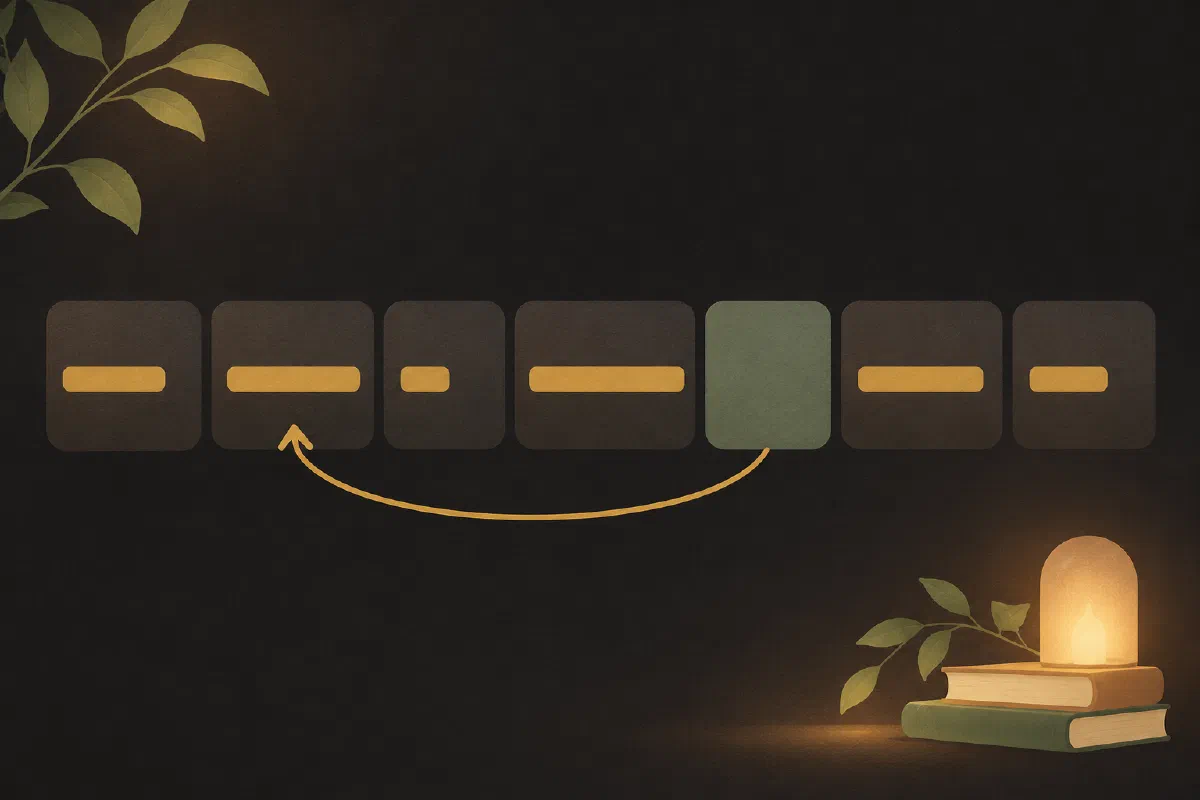
Illustrative example, not a real case: Maya, a project coordinator, has put off a quarterly budget review for two weeks. Her belief: “I need a free afternoon to do this properly.” Her calendar never shows one.
- Prediction: “If I work on it for 20 minutes between meetings, I’ll just get confused and have to redo it.”
- Monday: dread 8/10. She works 20 minutes and checks the first two cost lines. Dread afterwards: 5/10.
- Wednesday: dread 6/10. Another 20 minutes; she drafts the summary table. Dread afterwards: 3/10.
- Thursday: she tries the old way and waits for a free block. None appears, and the task stays where it was.
- Friday: 30 minutes finishes the first draft. Nothing needed redoing.
Her new rule, written on Friday: “I can do budget work in 20-minute pieces and save the long block for the final check.” This mirrors the “all or nothing” versus “bits and pieces” comparison CCI describes.
Fill-in template: your belief experiment
Fill this in for one belief this week.
- My belief (as I would say it): …
- The grain of truth in it: …
- My prediction if I start anyway: “If I …, then …”
- The task and time limit: … for … minutes
- When and where (if-then plan): “If …, then I will …”
- Rating before (0–10): …
- Rating after (0–10): …
- What I actually did: …
- Repeat 2 and 3, ratings before/after: … / …
- A more flexible rule I now have evidence for: …
CCI’s guide to adjusting rules adds two useful questions to ask about any belief: is it reasonable, realistic, fair and helpful, and how would you act if you already believed the new rule? The authors note that acting as if something were true often helps you start believing it.
When beliefs are not the whole story
Steel’s review found that task aversiveness, impulsiveness and distractibility were among the strongest and most consistent predictors of procrastination, alongside self-efficacy. If a task is boring or you are easily pulled away, changing the task and your surroundings matters as much as changing your thoughts.
Be kind to yourself while you run these tests. CCI notes that self-criticism tends to demotivate and make procrastination more likely, and suggests speaking to yourself as you would to a friend in the same situation.
Some beliefs are deeply rooted. CCI’s own materials say that underlying rules can be harder to shift and may need more intensive work with a professional who specialises in cognitive behavioural therapy. If that sounds like you, it may be worth talking to a qualified CBT therapist. If you have ADHD or suspect it, procrastination can have additional drivers; see ADHD and procrastination.
Summary and one next step
- Procrastination beliefs usually pair a true observation with an unhelpful conclusion.
- “I work best under pressure” holds for some people, but the costs often show up later.
- Confidence grows mainly from finished pieces of work, so small experiments beat inner debate.
- Write the belief as a prediction, test it several times, then adopt the rule your evidence supports.
Next step: pick one belief from the table, write it as a prediction, and test it today with a 10-minute session. If you use Cyklio, our focus timer app from Mindly 360, you can rate each session as full focus, distractions or not today and look back at your weekly report to see what your experiments actually show. The 7-day free trial needs no account and no card.