

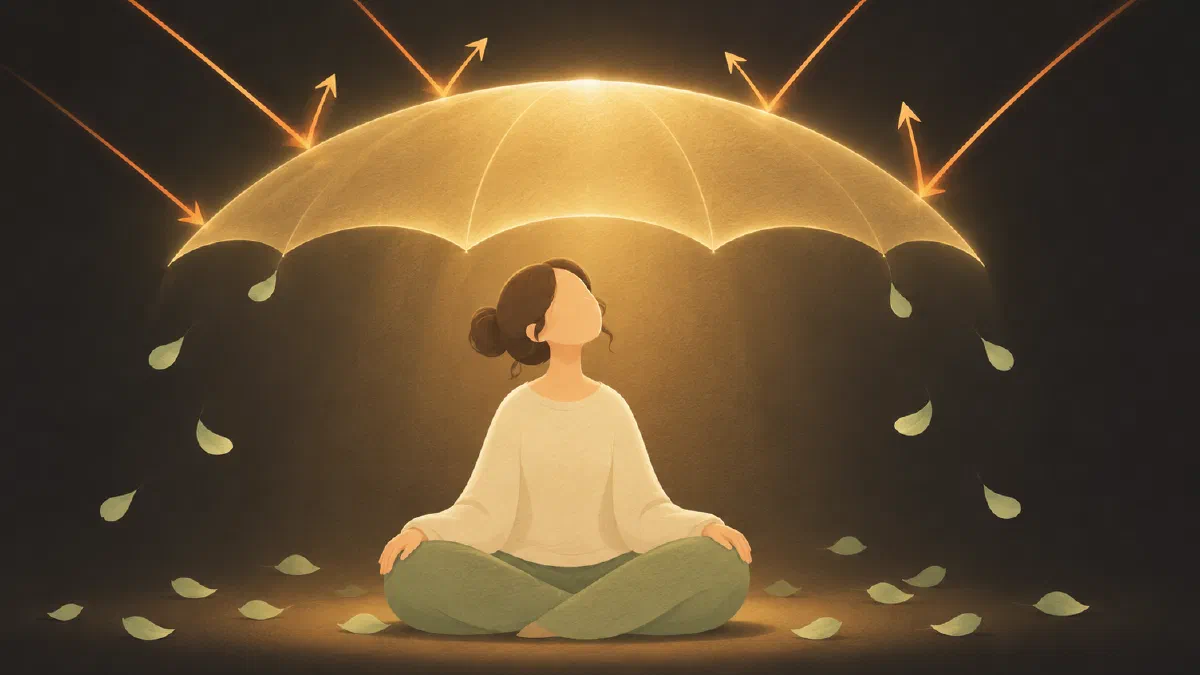
A short comment, a late reply or a “no” can hit some people far harder than the moment seems to deserve. This guide gathers everyday strategies for those moments: what to do in the first few minutes, how to rethink the story your mind tells you, who to talk to and what kinds of therapy exist.
This article is educational and does not replace advice from a doctor.
What actually helps with rejection sensitive dysphoria?
Rejection sensitive dysphoria (RSD) is a term for intense emotional pain triggered by rejection or disapproval. Cleveland Clinic notes that it is not an officially recognised medical condition, although experts use the term, and that it seems to happen most often in people with ADHD. For the full background, read what rejection sensitive dysphoria is and isn’t, and for the scientific debate, is rejection sensitive dysphoria real?.
Because RSD is not a formal diagnosis, there is no tested treatment protocol made specifically for it. The strategies below come from broader research and public health advice on emotions, stress and unhelpful thinking. Some have lab studies behind them, some are standard NHS self-help advice, and none is a cure.
Cleveland Clinic is also honest about the limits of self-help: some people can manage RSD on their own, but it is difficult, and it says it is important to see a healthcare provider. If the hits regularly cost you hours, relationships or sleep, treat professional support as part of the toolkit, not a last resort.
Pause techniques for the first few minutes
The most painful part of a rejection hit is often the first wave, when the urge to reply, apologise, argue or withdraw is strongest. The goal of a pause is not to make the feeling disappear. It is to put a few minutes between the feeling and what you do next.
- Name it. Say or write: “This is a rejection hit. I feel ashamed and scared.” In a brain imaging study, putting feelings into words reduced the response of the amygdala and related regions to negative images. That study used photos in a lab, not real rejection or RSD, so treat it as a reason to try labelling, not as proof it will work for you.
- Breathe slowly. The NHS breathing exercise for stress, anxiety and panic is to breathe in gently through your nose and out through your mouth, counting from 1 to 5 if it helps, for at least 5 minutes. For anger, the NHS similarly suggests you pause before reacting by counting to 10 and doing calming breathing.
- Delay any reply. Don’t send apologies, explanations or “fine, forget it” messages at the peak. If the words need to go somewhere, draft them in a notes app and decide later.
- Talk to yourself by name. In a series of experiments, people who used their own name or “you” instead of “I” while thinking about a stressful social situation showed less distress and performed better than people who used “I”. So instead of “I ruined it”, try “Sam, you’re hurt, and you don’t know the full story yet.”
- Move your body. A short walk, stretching or a glass of water is a common way to break the loop. The NHS lists exercise such as walking or running as a way to relax and reduce stress when dealing with anger.
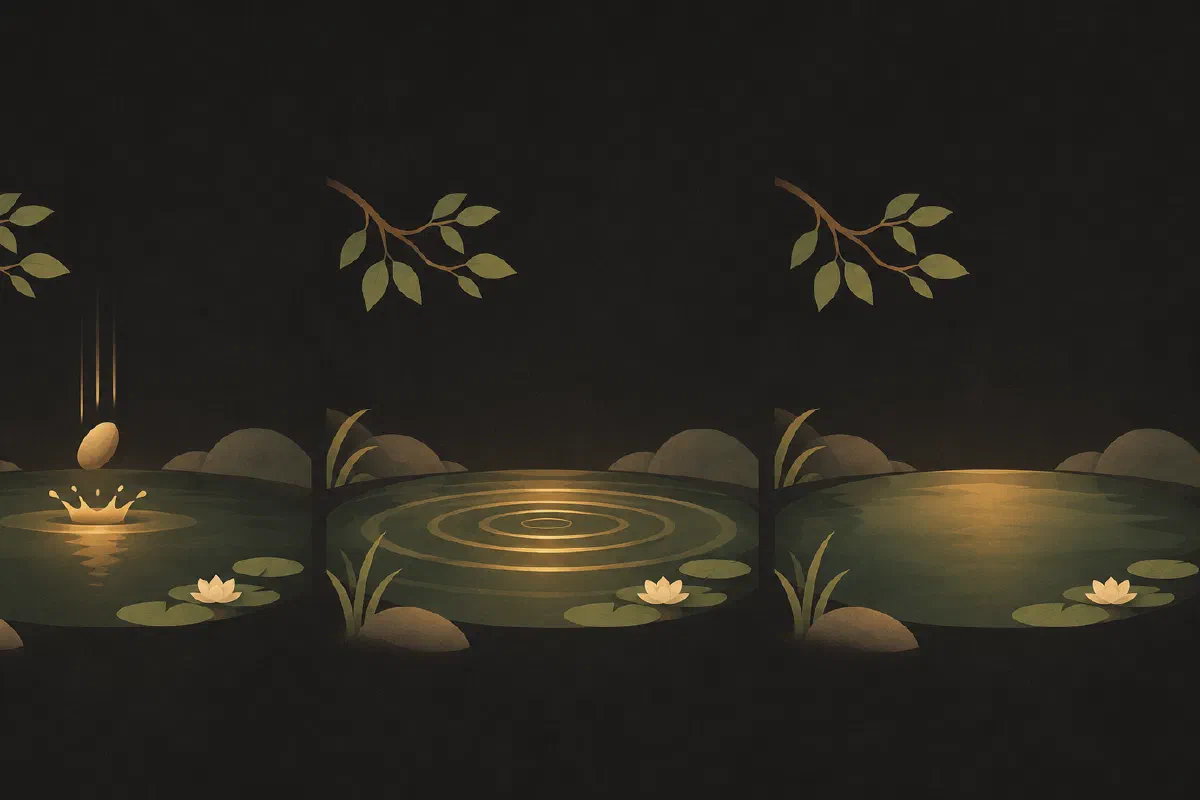
Reframing: catch it, check it, change it
Once the first wave has passed, the next challenge is the story your mind has already written: “They think I’m useless”, “Everyone is annoyed with me”, “I always mess this up”. This is where reframing comes in.
The NHS self-help approach is called catch it, check it, change it. You learn to spot common unhelpful patterns, such as expecting the worst, focusing only on the negatives, all-or-nothing thinking and blaming yourself, then test the thought with questions and build a more balanced alternative. The same page is realistic: changing a thought is not always possible, but the practice can build flexible thinking and help break a negative spiral.
Ambiguous moments deserve special attention. Research on rejection sensitivity found that people who anxiously expect rejection readily perceive intentional rejection in the ambiguous behaviour of others. That research did not study ADHD or RSD, but it describes exactly the moment when checking the evidence helps most.
A fill-in reframe card
Copy this into your notes and use it within an hour or two of a hit:
| Prompt | Your answer |
|---|---|
| What exactly happened? (only the words or actions, no interpretation) | |
| What did my mind say it means? | |
| Which pattern is this? (expecting the worst, only the negatives, all-or-nothing, self-blame) | |
| What evidence supports it? What evidence doesn’t? How likely is the outcome I fear? | |
| Two other possible explanations | |
| What would I tell a friend in this situation? | |
| A more balanced version of the thought | |
| One small thing I can do next |
The questions in the middle rows follow the checks the NHS suggests, including how likely the feared outcome is and what you would say to a friend.
Step back instead of replaying
Many people with strong rejection reactions replay the moment again and again. There is a difference between replaying a painful memory and looking at it from a distance. In three studies, people who spontaneously looked back on negative memories from a more distanced, observer-like perspective showed less emotional reactivity, and the benefit was linked to reconstruing the experience (making new sense of it) rather than simply recounting it. A practical version: describe the event in writing as if it happened to someone else, then ask what that person needs.
Be kind to yourself after a mistake
Sometimes the criticism is fair, and that can hurt even more. Cleveland Clinic encourages people with RSD to be kinder to themselves and to accept that failure and rejection happen to everyone. Self-compassion is not the same as letting yourself off the hook: in four experiments, a self-compassion exercise after a mistake or failure led to more motivation to improve, and in one experiment more time spent studying for a difficult test, than the comparison conditions. Those were short lab studies, not studies of RSD, but they challenge the idea that being harsh with yourself is what drives improvement.
Worked example: one comment, one evening
The following is an illustrative example, not a real person.
Sam volunteers for a local running club and writes its monthly newsletter. At 19:10 the organiser replies to the draft: “Thanks. I’ll make a few changes before it goes out.”
- 19:11. Sam’s chest tightens. The mind supplies the story: “It was bad. They regret asking me.”
- 19:12. Sam names it: “Rejection hit.” Phone face down, five minutes of slow breathing on the sofa.
- 19:20. Sam opens the reframe card. Facts: one sentence, “a few changes”. Pattern: expecting the worst. Other explanations: the organiser always edits; there was a date to add. What Sam would tell a friend: “That’s a normal edit.”
- 19:30. Sam texts a friend from outside the club: “Small thing stung tonight, can I vent for five minutes? I don’t need advice.”
- 19:45. The sting is still there, but smaller. Sam starts a 15-minute session on an unrelated task and leaves the newsletter alone until tomorrow.
The comment takes up 35 minutes of the evening instead of all of it. If moments like this happen mostly at work, see RSD at work: coping with criticism for feedback scripts and conversations with a manager.
Talking to someone
Rejection hits feel very private, which is exactly why saying them out loud can help. The NHS suggests that people dealing with anger talk to someone not involved in the situation, such as a friend or GP, and also mentions peer support, where people share experiences to help each other. More generally, the NHS says good relationships are important for your mental wellbeing, giving a sense of belonging, self-worth and emotional support.
A few practical ways to make this easier:
- Pick one or two people in advance who are calm and not connected to the usual triggers.
- Say what you need, for example “just listen” or “help me check if I’m reading this right”.
- Keep it short if long conversations feel draining: “Five minutes, then I’ll be fine” is a valid request.
- Explain RSD on a good day, not in the middle of a hit, so the people close to you know what is happening.
Lowering the baseline: stress and sleep
Cleveland Clinic notes that stress and anxiety can make RSD worse and recommends making self-care a priority. Sleep matters too: a large meta-analysis of experimental studies in healthy people found that sleep loss reduced positive mood and increased anxiety symptoms. It was not a study of RSD, but it is a good reason to expect more from yourself on rested days and to be gentler on tired ones.
Therapy options for rejection sensitivity
Therapy does not stop RSD from happening, but according to Cleveland Clinic it can help people learn to process and manage their feelings so they are less overwhelming. The same source recommends finding a therapist you feel comfortable with and seeing them regularly.
The most common starting point is a talking therapy:
- Cognitive behavioural therapy (CBT) is a talking therapy in which a therapist helps you change how you think and act. The NHS says it usually involves 5 to 15 sessions, one-to-one, in a group or as guided self-help. NIMH lists CBT among the psychosocial interventions used for ADHD. For what ADHD-focused CBT involves, see CBT for adult ADHD.
- Other talking therapies. NHS talking therapies for anxiety and depression offer options including guided self-help, CBT, counselling, interpersonal therapy and mindfulness-based cognitive therapy. The same page notes that other therapies may be offered for specific conditions, such as dialectical behaviour therapy for personality disorders, and that a GP can tell you what is available locally.
How you access therapy depends on where you live. In England, adults registered with a GP can refer themselves to NHS talking therapies for anxiety and depression without speaking to a GP first. The NHS also mentions private therapy and support through an employer, university or local charity. Elsewhere, a family doctor is usually the first step. Medication and diagnosis are topics for your doctor and are not covered here. If you have wondered whether your reactions could be something other than RSD, read RSD vs borderline personality disorder and bring the question to a professional.
Which step fits right now?
| What you notice | Try first | Consider professional help when |
|---|---|---|
| A sharp sting that fades within hours | Pause, name it, delay replies | It happens most days |
| Replaying the same comment for days | Reframe card, write it as if it happened to someone else | Replaying keeps you from sleeping or working |
| Avoiding people or goals to escape possible criticism | Talk it through with someone you trust | Avoidance is shrinking your life |
| Sudden anger or tears you regret later | Count to 10, breathe, step away | It is damaging relationships |
| Low mood that lingers after a hit | Self-care, sleep, talking to someone | It doesn’t lift or keeps returning |
| Thoughts of harming yourself | Get urgent help now | Always, straight away |
For a wider view of big feelings in ADHD, see ADHD and emotional dysregulation.
When to get urgent help
If you have thoughts of harming yourself, or you feel you cannot keep yourself or someone else safe, call your local emergency number or go to the nearest emergency department. In the UK, the NHS says to call 999 or go to A&E if someone’s life is at risk or you do not feel you can keep yourself or someone else safe, and the same page lists Samaritans on 116 123 for confidential support. In the US, NIMH lists the 988 Suicide and Crisis Lifeline (call or text 988). Elsewhere, look up your country’s crisis line or ask your doctor.
Summary
- RSD is a useful everyday term, not a diagnosis, and there is no protocol made just for it; the strategies here come from general research on emotions and stress.
- In the first minutes: name the feeling, breathe slowly, delay any reply and talk to yourself by name.
- Afterwards: catch, check and change the thought, look at the event from a distance and treat yourself as you would a friend.
- Talk to someone outside the situation, protect your sleep and keep stress in check.
- If the hits disrupt your life, talking therapies such as CBT can help you manage them; get urgent help if you think of harming yourself.
Your next step: copy the five pause steps and the reframe card into your notes today, before you need them. After the next hit, use them, then return to one small task for 10 to 15 minutes with the free Cyklio Focus Timer. If you want the same on your phone, Cyklio is our own focus timer app: sessions run from 10 to 60 minutes, and you can rate each one as full focus, distractions or not today, with no judgement either way.