

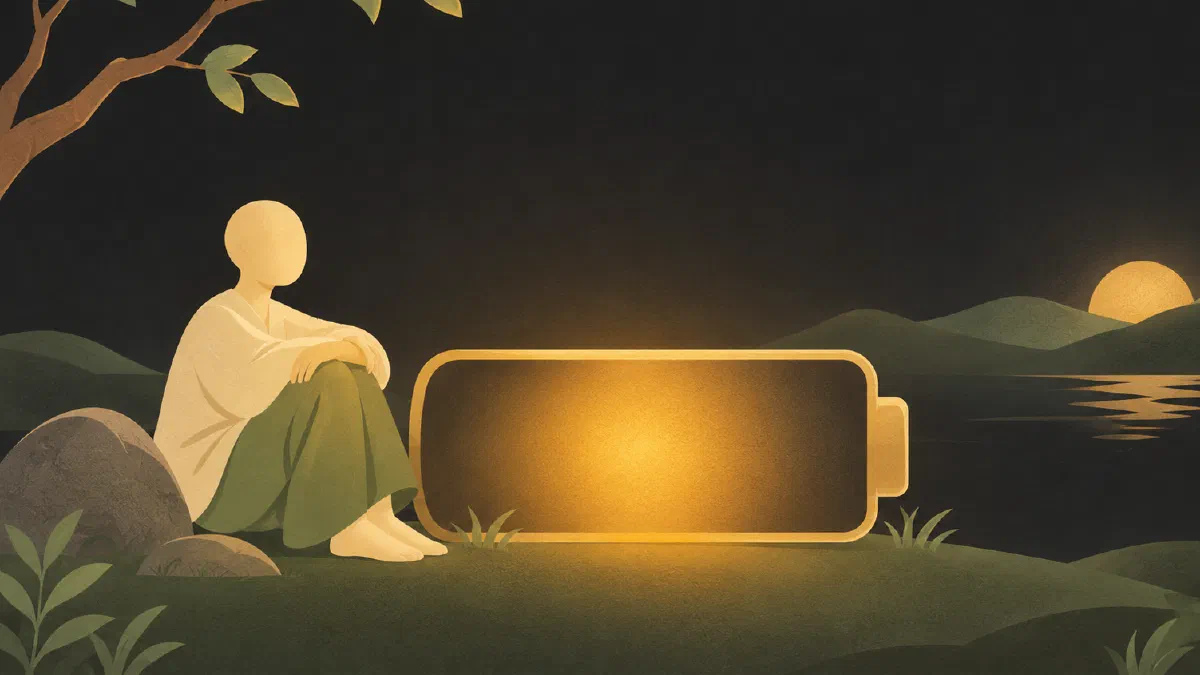
“Burnout” gets used for everything from a long week to a total collapse at work. This article explains what the word means in the World Health Organization’s definition, which signs and work conditions to look for, what to do first and when it is time to see a doctor.
This article is educational and does not replace advice from a doctor.
If you feel you cannot keep yourself safe, or you are having thoughts of harming yourself, contact your local emergency number or a crisis line in your country straight away. If you are not sure which number to call, a doctor, pharmacist or local health service can tell you.
What is burnout?
The World Health Organization includes burn-out in ICD-11, its international classification, and defines it as a syndrome resulting from chronic workplace stress that has not been successfully managed. The WHO describes three dimensions:
- feelings of energy depletion or exhaustion;
- increased mental distance from your job, or feelings of negativism or cynicism related to it;
- reduced professional efficacy.
Three details in that definition matter:
- It is about work. The WHO says burn-out refers specifically to the occupational context and should not be used to describe experiences in other areas of life.
- It is not classified as a medical condition. It sits in the ICD-11 chapter “Factors influencing health status or contact with health services”, which covers reasons people contact health services that are not illnesses or health conditions.
- The cause is chronic, unmanaged stress. One bad week is not burnout in this sense. It builds over time when the pressure is not resolved.
Researchers describe it in similar terms. In a review in the journal World Psychiatry, Christina Maslach and Michael Leiter call burnout a psychological syndrome that develops as a prolonged response to chronic interpersonal stressors at work, with the same three parts: overwhelming exhaustion, cynicism and detachment, and a sense of ineffectiveness and lack of accomplishment. They also note that countries differ: some, such as Sweden and the Netherlands, have used burnout as a diagnosis, while North American jurisdictions have been reluctant to.
If you have ADHD and wonder how this plays out for you, our article on ADHD burnout at work covers that side in detail, and hyperfocus burnout looks at the boom-and-bust pattern some people with ADHD describe.
Signs of burnout: what the three dimensions look like
There is no single symptom checklist in the WHO definition, so the table below translates each dimension into everyday examples. The examples are illustrations of how people commonly describe these feelings, not a diagnostic test.
| WHO dimension | What it can look like on a workday |
|---|---|
| Exhaustion | Waking up tired before the day starts; needing the whole weekend just to get back to “empty”; small tasks feeling heavy |
| Mental distance or cynicism | Dreading messages from work; caring less about outcomes you used to care about; sarcasm or detachment in meetings |
| Reduced professional efficacy | Feeling you no longer do your job well; tasks taking much longer; losing confidence in your judgement |
Burnout grows out of chronic stress, so it helps to know the signs of stress as well. The NHS lists physical, mental and behavioural signs, including:
- body: headaches or dizziness, muscle tension or pain, stomach problems, chest pain or a faster heartbeat;
- mind: difficulty concentrating, struggling to make decisions, feeling overwhelmed, constantly worrying, being forgetful;
- behaviour: being irritable and snappy, sleeping or eating too much or too little, avoiding certain places or people, drinking or smoking more.
The UK’s Health and Safety Executive adds signs that colleagues may notice at work, such as taking more time off, arriving later, being withdrawn, mood swings, and loss of motivation, commitment and confidence.
None of these signs is specific to burnout. Chest pain and a racing heart in particular should be checked by a doctor in their own right, not put down to work stress.
What causes burnout at work?
Because the WHO defines burn-out as a result of workplace stress, the causes are mostly found in how work is organised, not in personal weakness. Maslach and Leiter describe burnout as the result of mismatches between the person and the job in six areas of worklife; the bigger the mismatch, the greater the likelihood of burnout. Here are the six areas, with a question you can ask yourself for each:
| Area | What goes wrong | A question to ask yourself |
|---|---|---|
| Workload | Chronic overload that leaves little time to recover | Do I ever get to the end of a day with the work done? |
| Control | Little say in decisions or no access to the resources you need | Can I influence how and when I do my work? |
| Reward | Too little recognition, financial, institutional or social | Does anyone notice the work I do? |
| Community | Lack of support and trust, unresolved conflict | Who could I ask for help this week? |
| Fairness | Decisions that feel unfair, disrespectful treatment | Are decisions about me made in a way I can accept? |
| Values | A gap between what you value and what the job asks of you | Am I regularly asked to do things I disagree with? |
Official bodies name similar factors. The WHO’s fact sheet on mental health at work lists psychosocial risks including excessive workloads or work pace, understaffing, long or inflexible hours, lack of control over job design or workload, an unclear job role, limited support from colleagues, bullying, job insecurity and conflicting home and work demands. The HSE groups the main causes of work-related stress into six areas: demands, control, support, relationships, role and change, and notes that stress affects people differently.
That last point is worth keeping in mind. The HSE notes that what stresses one person may not affect another, and that factors such as skills, experience, age or a disability can affect whether someone copes. Neither reaction is a character flaw.
Why burnout is worth taking seriously
It can be tempting to push through and wait for a quieter month. The evidence suggests that is risky. A systematic review of 36 prospective studies found that burnout predicted a range of later physical, psychological and occupational problems, including type 2 diabetes, coronary heart disease, prolonged fatigue, insomnia, depressive symptoms, job dissatisfaction and absenteeism. These are associations from observational studies, some findings conflicted, and they do not mean burnout will cause any of these in you. They are still a good reason to act early rather than wait.
A worked example: mapping one draining week
This is a composite example made up for illustration, not a real person.
Maya, 41, is a project manager. For four months she has felt tired every morning, has stopped replying to anything non-urgent and keeps thinking “I’m just bad at this now”. She spends ten minutes on a Friday mapping her week against the six areas:
- Workload: two projects since a colleague left; three evenings of catch-up this week. Mismatch.
- Control: deadlines set by another team without asking her. Mismatch.
- Reward: her manager thanked her once. Fine.
- Community: her team is friendly, but she has stopped asking for help. Partly her own pattern.
- Fairness and values: no real problem.
The picture changes from “I’m failing” to “two specific things are overloading me”. That gives her something concrete to raise: the second project and the deadline process. It does not tell her whether her tiredness has another cause too, which is why she also books a GP appointment.
What to do first if you think you have burnout
There is no quick fix, and Maslach and Leiter point out that very little research has evaluated how well burnout interventions work. They also note that most attention has gone to individual strategies, even though the research evidence points to situational factors playing the primary role. The steps below are sensible starting points drawn from public health guidance, not a cure. A full recovery plan is covered in our guide to burnout recovery.
- Write down what is happening for one or two weeks. When did the exhaustion start? Which of the six areas feels mismatched? How are your sleep and mood? Notes make conversations with your manager or doctor much easier.
- Tell someone. The HSE suggests that if you think you have a problem, you can speak to your manager, a colleague or your GP. The NHS also suggests talking to a friend, family member or health professional.
- Raise one specific work factor. Pick the biggest mismatch and suggest one change, for example handing over a project, agreeing priorities or getting a say in deadlines. The WHO recommends that employers manage psychosocial risks through organisational interventions that target working conditions, and that workers with mental health conditions can be supported with reasonable accommodations such as flexible hours, modified tasks or time off for appointments.
- Shrink the daily plan. The NHS advises against trying to do everything at once and suggests setting small goals you can realistically reach and using simple time-management techniques to feel more in control. If your days feel unmanageable, our guide to regaining control when you are overwhelmed at work can help.
- Protect sleep. NHS advice on tiredness includes going to sleep and waking up at consistent times and avoiding screens in the hour before bed.
- Watch for unhelpful coping. The NHS advises trying not to use alcohol, cigarettes, gambling or drugs to relieve stress, because these can all contribute to poor mental health.
If you are wondering whether you need time away from work, our article on burnout and sick leave looks at that decision.

When to see a doctor
Because burnout is not a medical diagnosis, a doctor’s main job is to check what else might be going on and how to support you. The HSE points out that signs of stress can also be signs of other conditions. The NHS lists stress and depression among the common causes of tiredness, alongside poor sleep, an unhealthy lifestyle, hormonal changes, some illnesses and some medicines.
Book an appointment with your GP or family doctor if:
- you have been tired for a few weeks and do not know why, or your tiredness affects your daily life;
- you are tired and have other symptoms, such as weight loss or mood changes;
- you are struggling to cope with stress, or what you have tried is not helping;
- you have had symptoms of depression, such as continuous low mood, feeling hopeless or losing interest in things, for most of the day, every day, for more than two weeks.
Burnout and depression are closely linked: Maslach and Leiter describe research suggesting they influence each other over time, while stressing that this does not make them the same thing. Our article on burnout vs depression explains the differences. Take your notes from step 1 with you.
Get urgent help if someone’s life is at risk or you do not feel you can keep yourself safe. In the UK, the NHS advises calling 999 or going to A&E in that situation; elsewhere, call your local emergency number or a crisis line in your country, or ask someone you trust to help you get support.
Summary
Burnout, in the WHO’s definition, is a work-related syndrome caused by chronic stress that has not been managed, with three dimensions: exhaustion, mental distance or cynicism, and reduced efficacy. It is an occupational phenomenon, not a medical condition.
- The signs overlap with stress: tiredness, poor concentration, irritability, withdrawal and physical symptoms.
- The causes are mostly in how work is set up: workload, control, reward, community, fairness and values.
- First steps are to write down what is happening, tell someone, raise one specific work factor, shrink the daily plan and protect sleep.
- Lasting tiredness or low mood needs a doctor’s check, because other conditions can look the same.
Your next step: this week, spend ten minutes mapping your work against the six areas, as Maya did, and circle the one mismatch you will raise first. If it helps to see your energy over time, Cyklio, our focus timer app, lets you rate each focus session and shows daily, weekly and monthly reports; it has a 7-day free trial with no account or card needed. It does not diagnose or treat anything, but a run of “not today” ratings can be useful to bring to a conversation. You can also try the free Cyklio Focus Timer in your browser or read more about the app.
This article is educational and does not replace advice from a doctor.